Route 66: End to End on Two Wheels, Part 1
Posted on Sun 21 June 2026 in Rides
There's a moment, early in a long trip, when you realize you've actually done it. You've left. Home is behind you, everyone you know is behind you, the routine is behind you. The road ahead is the only thing that's real.
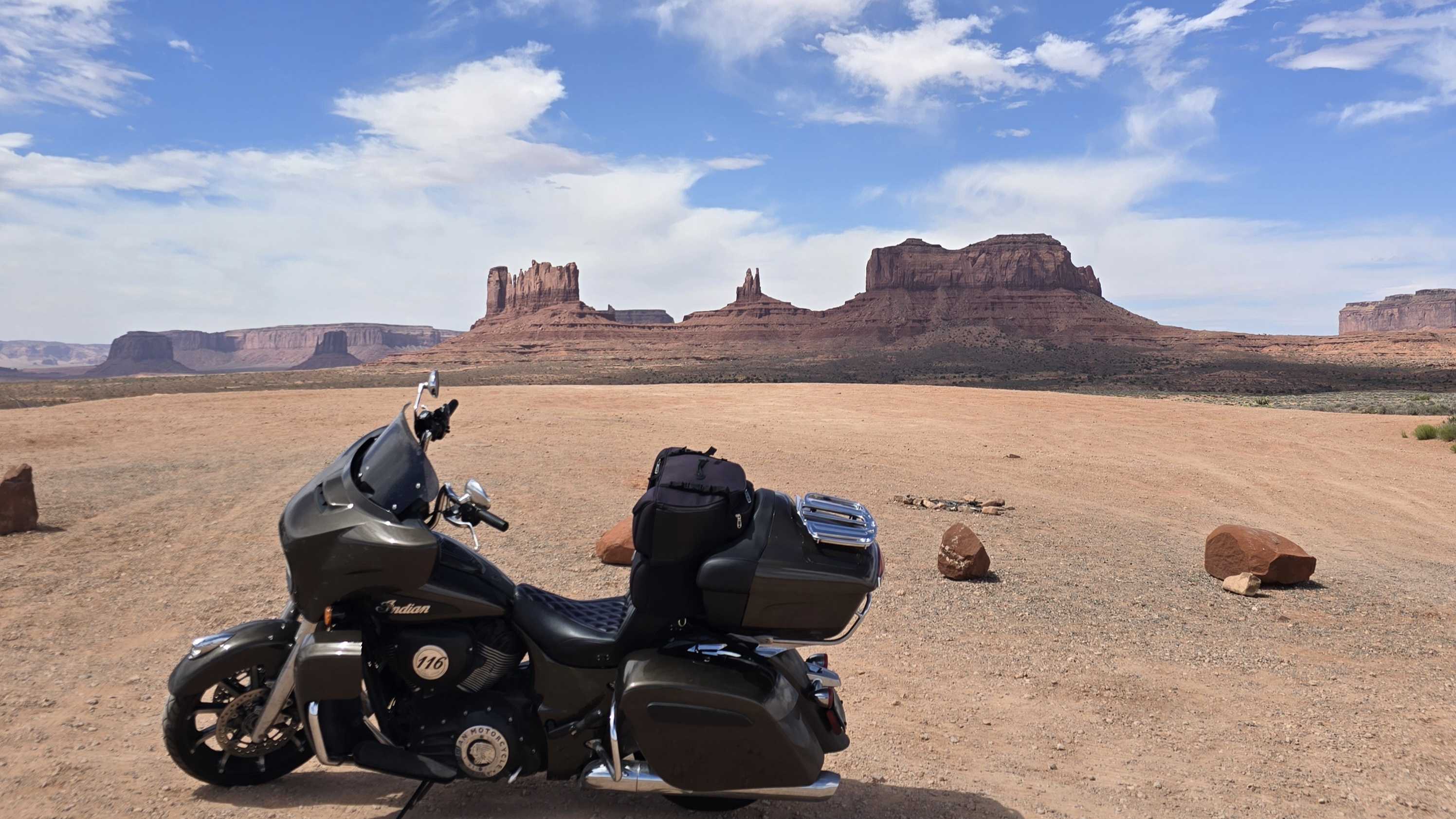
For me, this trip carried extra weight. After an accident last year, that shook my confidence and tested my commitment to riding, I needed to know - really know - that I was still a biker. This ride was my answer. 26 days, 6,000 miles, from Delaware, Ohio to Huntington Beach, California and back. The Legends Never Die Tour - the Route 66 leg - was the spine of the westbound journey, roughly 2,400 miles of American history, roadside kitsch, genuine beauty, and long meditative stretches of road that give you more time alone with your thoughts than you might want.
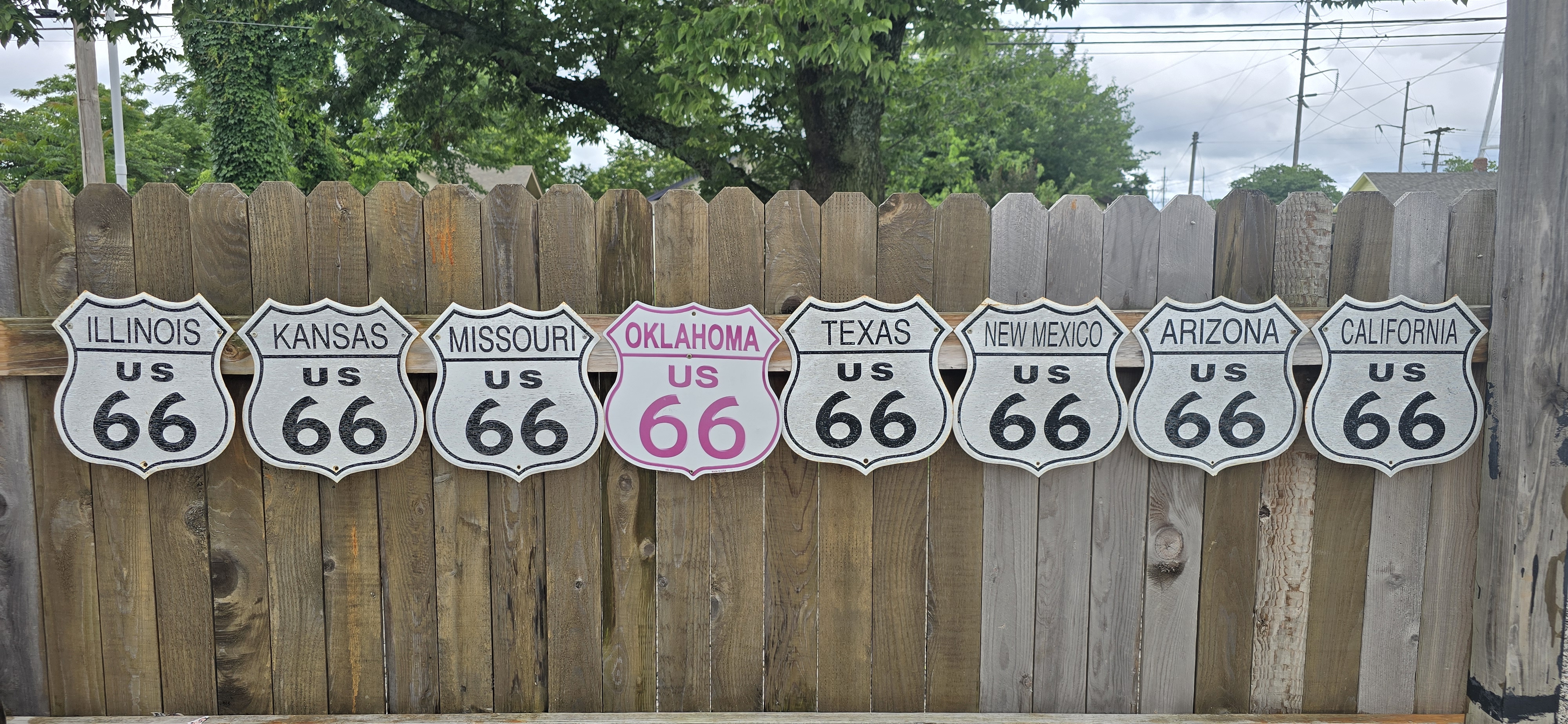
Here's what I found.
Illinois: Where the Mother Road Begins
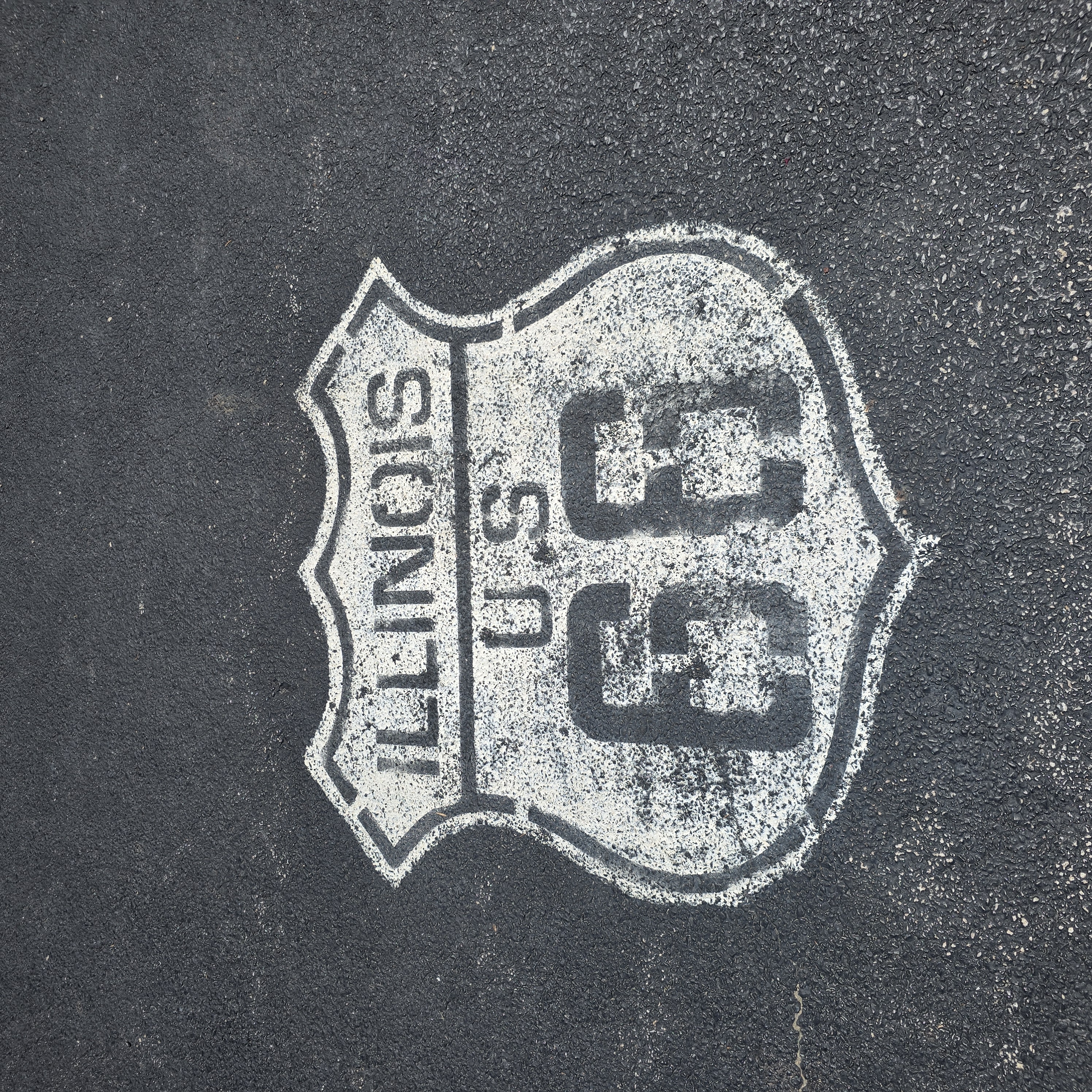
Route 66 officially begins - or ends, depending on which direction you're traveling - at the corner of Michigan Avenue and Adams Street in Chicago. I didn't start there. I came from Ohio, but I rode into downtown Chicago to get a photo of the original start sign. Unfortunately, the location and circumstance didn't let me capture a good photo. But Lozen and I hit the official start of the route, and the adventure had begun!
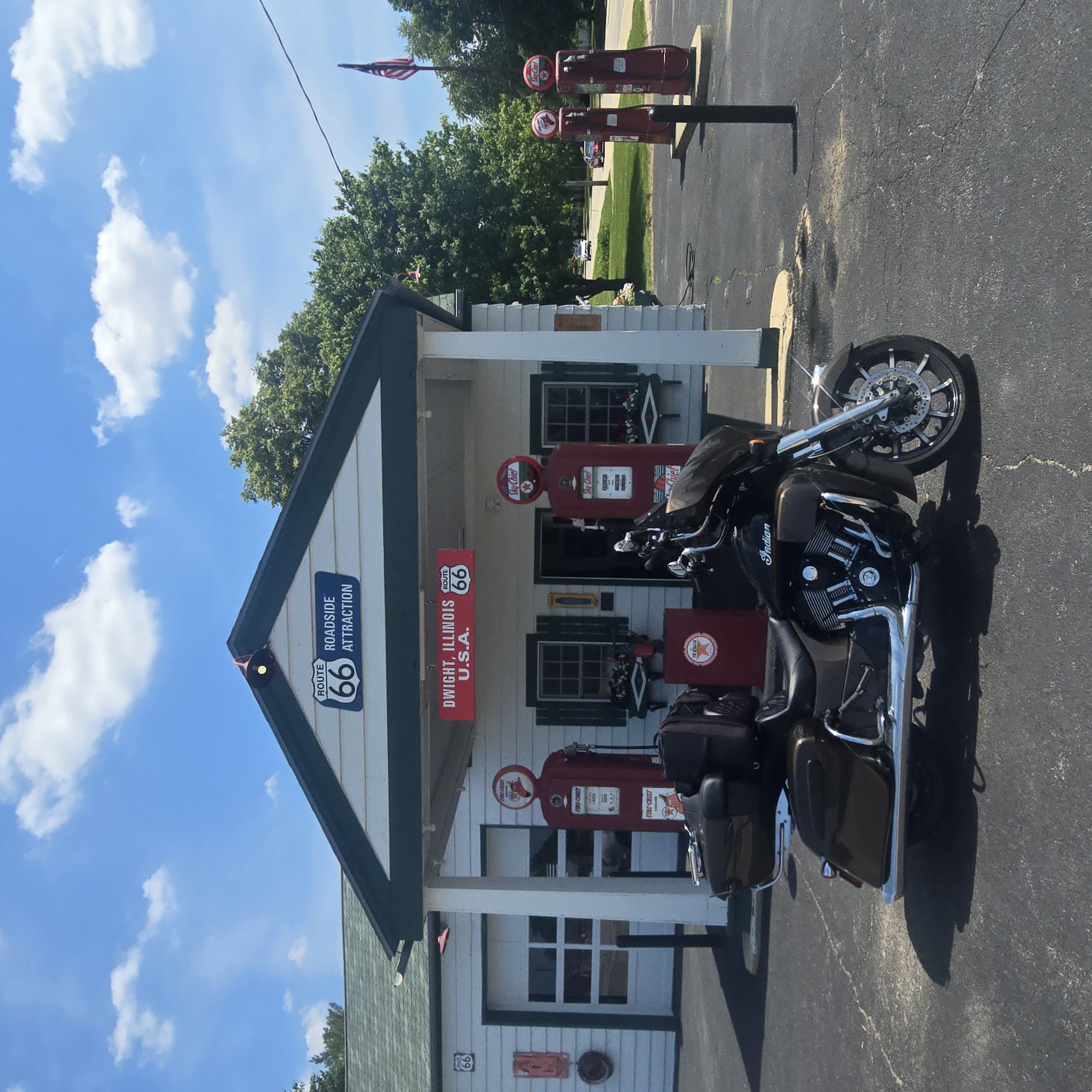
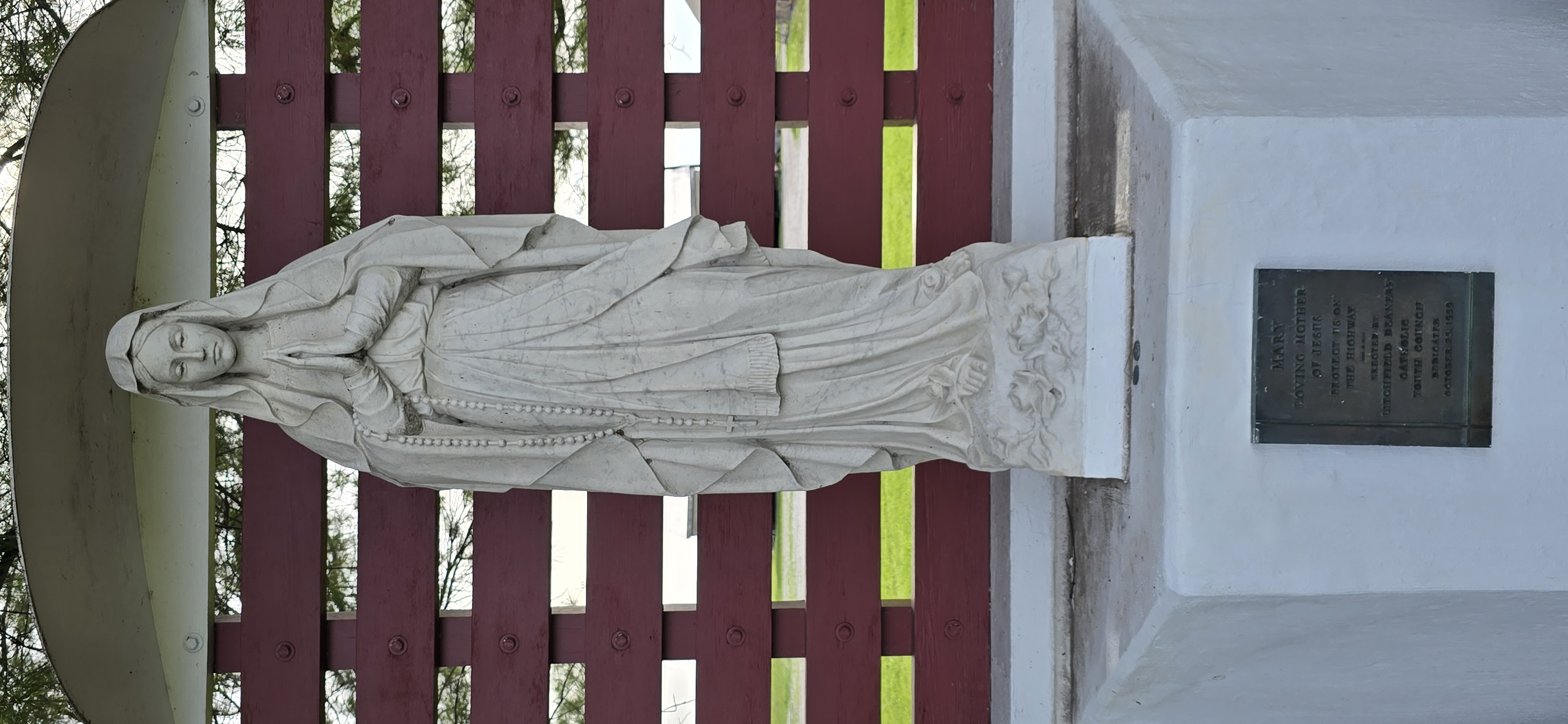
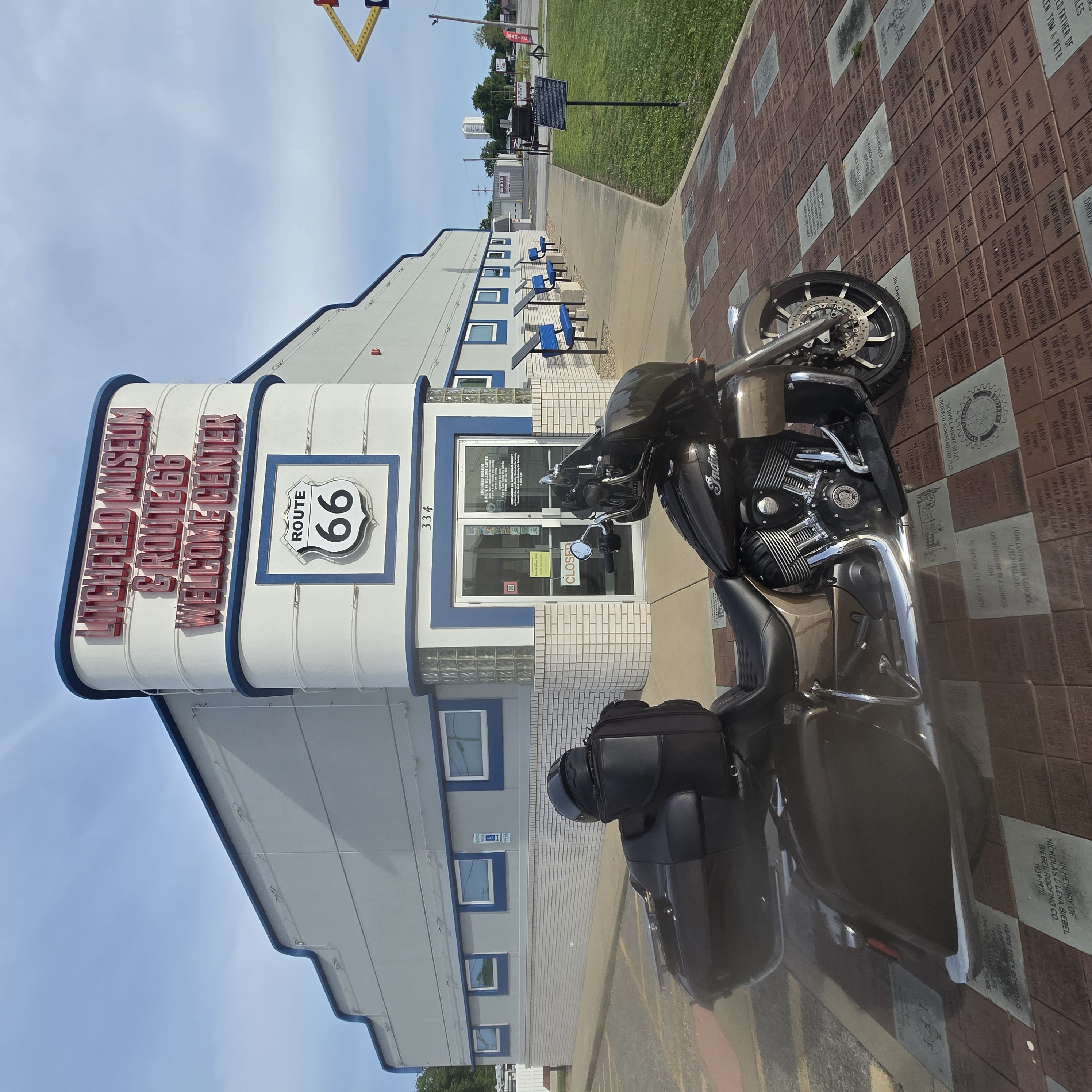
Illinois gave me some of the trip's quieter pleasures. Ambler's Texaco Station in Atlanta - a beautifully preserved relic, the kind of place where you half expect a guy in coveralls to wander out and ask if you need a fill-up. The Shrine of Our Lady of the Highway, a small roadside memorial that carries the weight of those lost on the route. The Litchfield Museum, tucked away and easy to miss. These aren't the headline attractions. They're the things that make Route 66 worth riding slowly.
Missouri: History Gets Complicated
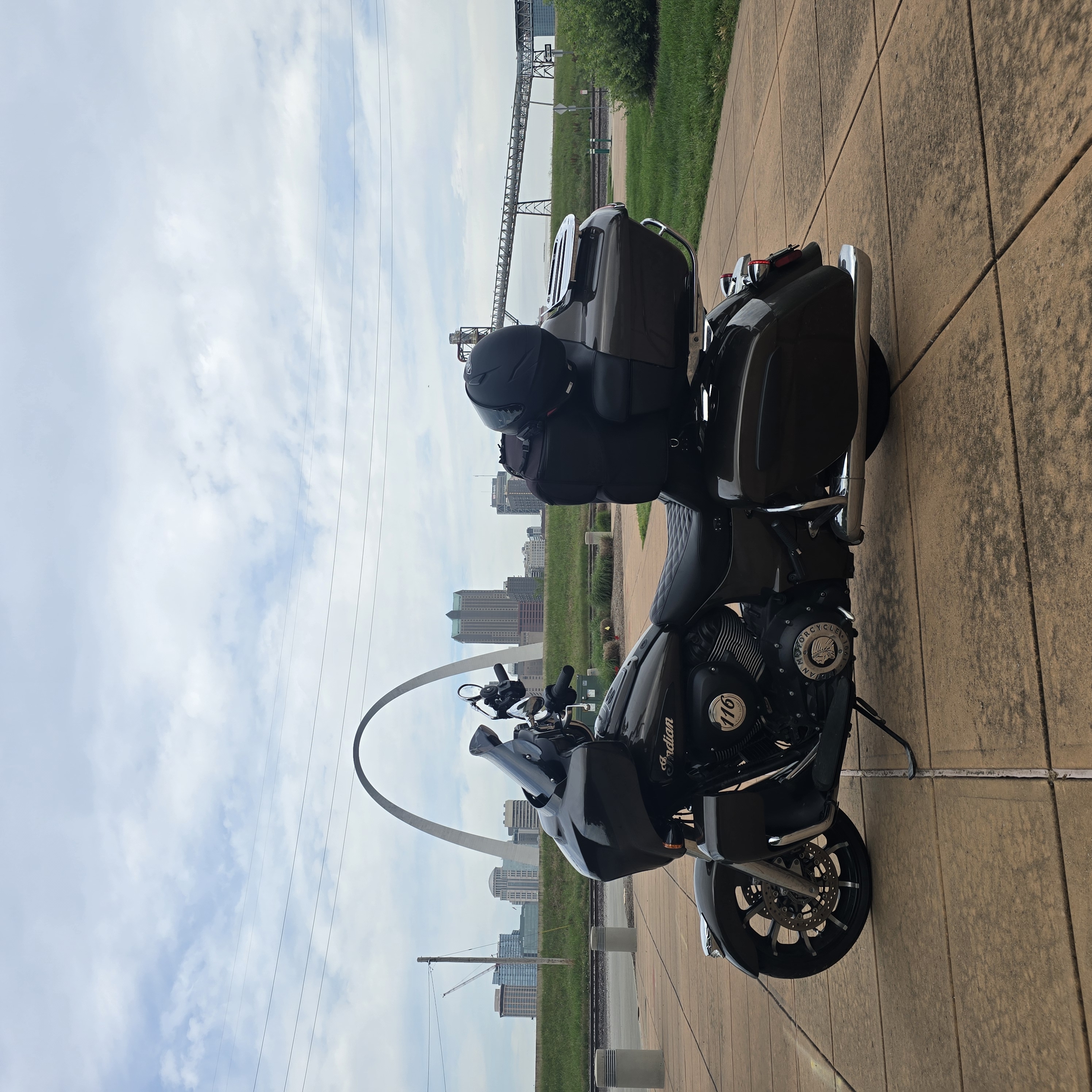
Missouri opened with the St. Louis Arch gleaming on the horizon across the river - one of those sights that earns the word "iconic" without any irony. I'd seen it before. It still gave me pause.
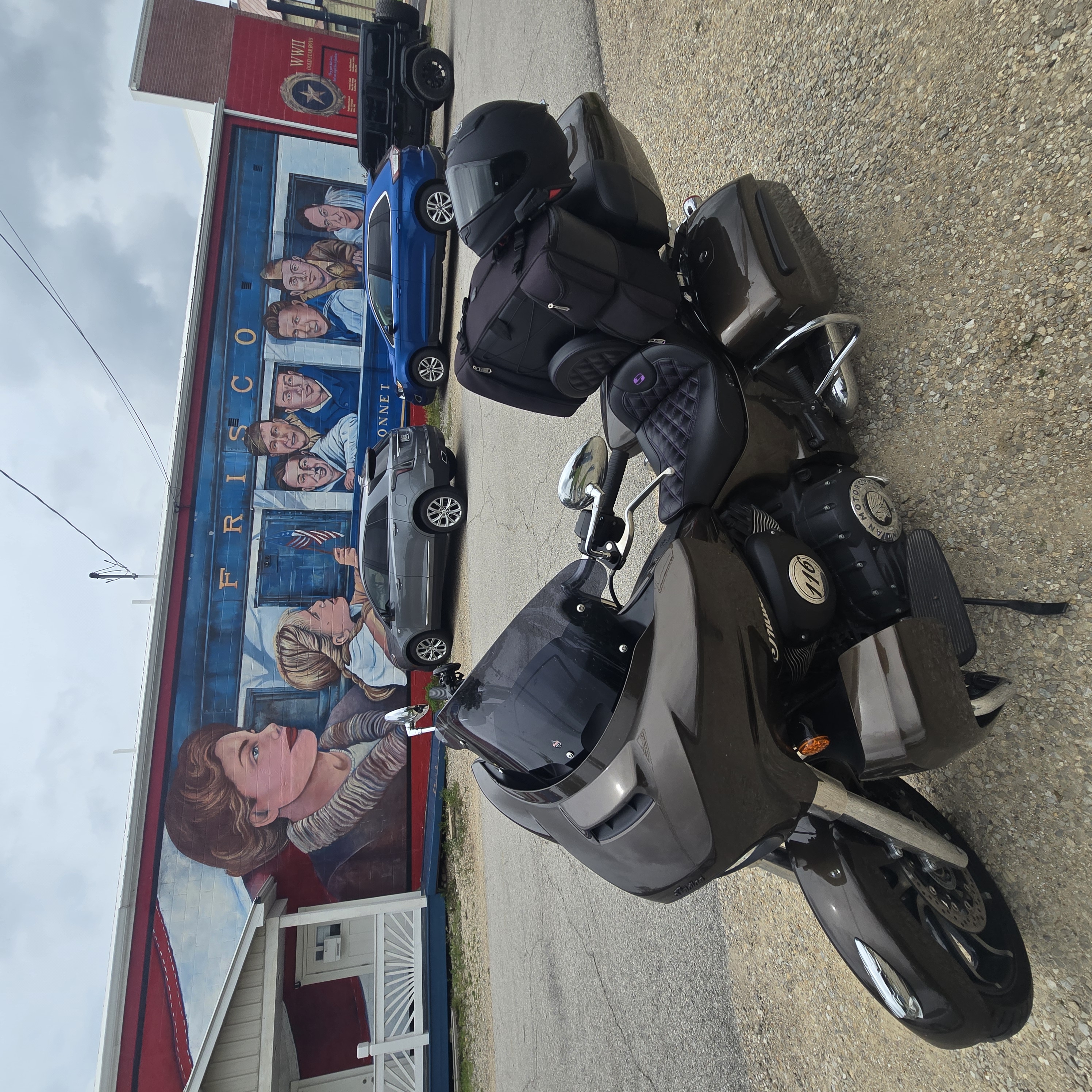
But Missouri's Route 66 corridor was where the road first showed me its complexity. Cuba, Missouri has turned its downtown into an outdoor mural gallery - vivid, full-scale paintings covering entire building facades, each one telling a piece of the town's or the road's history. I rode slowly through town, craning my neck at each one.
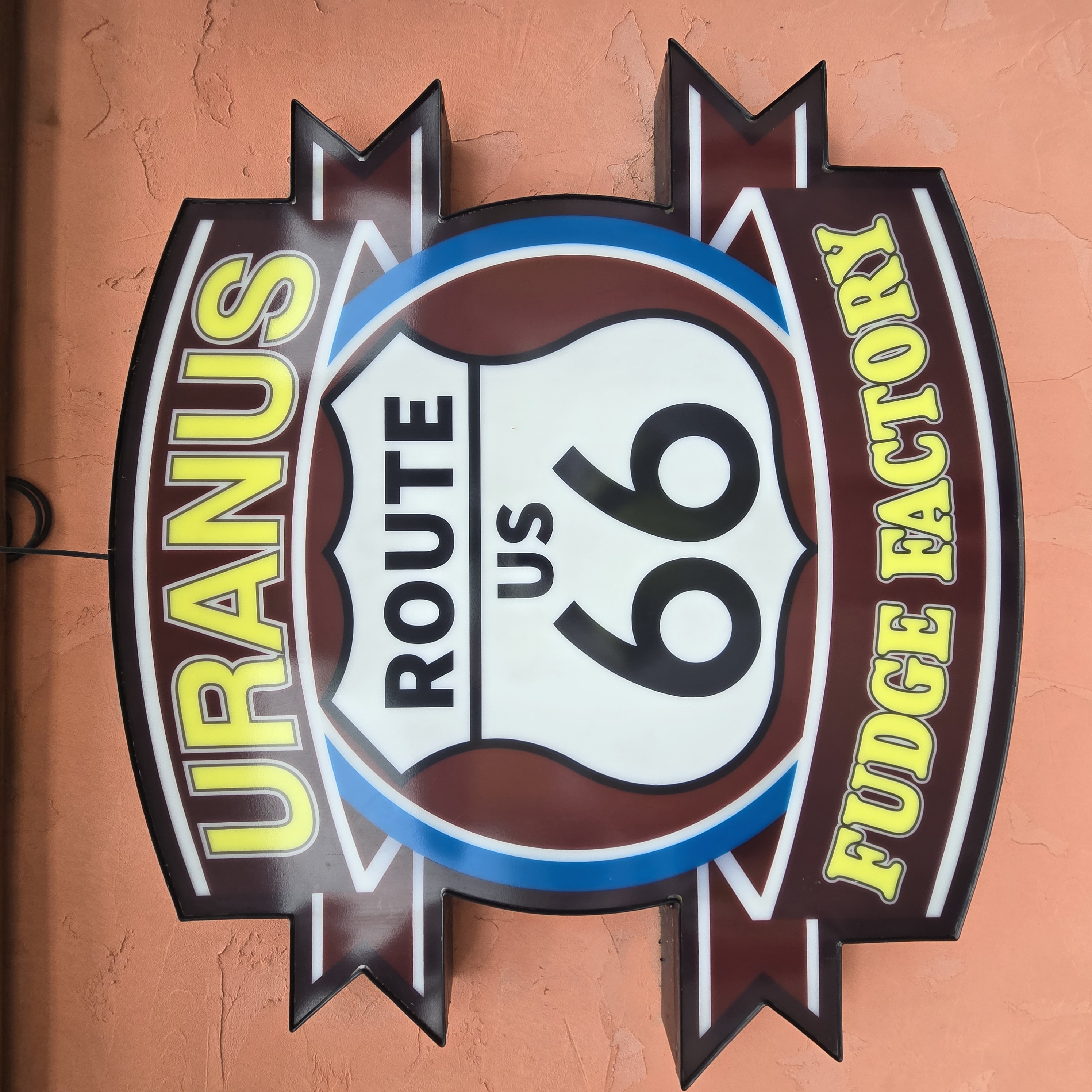
Then there was the Uranus Fudge Factory. I'll let the name speak for itself. Some things about Route 66 are not subtle.
The rain found me somewhere south of Doolittle and didn't let up until Springfield. I ate dinner in a diner with wet gear hanging off the back of my chair and felt completely content.
Oklahoma: Soul of the Road
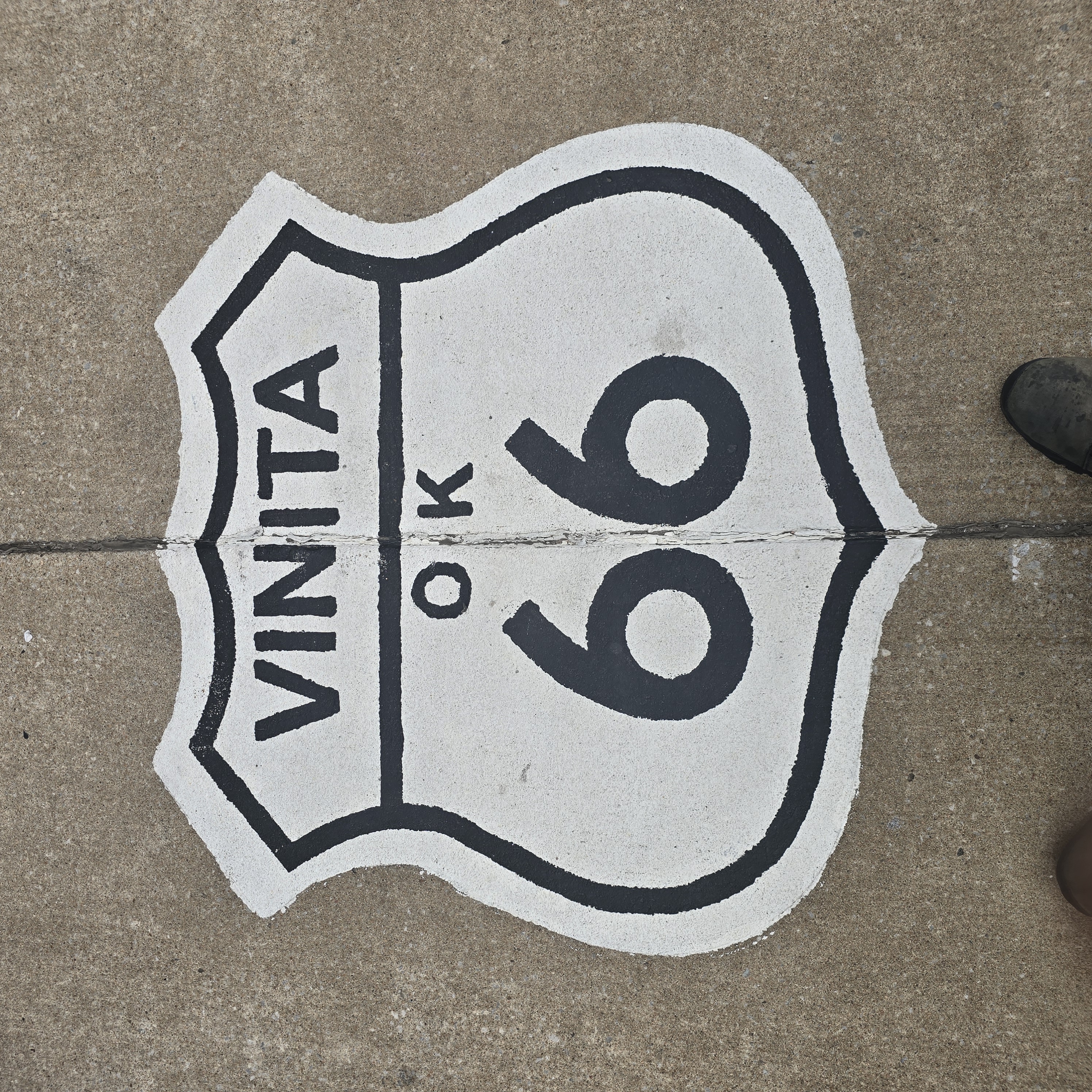
If Illinois is where Route 66 starts and California is where it ends, Oklahoma is where it lives.
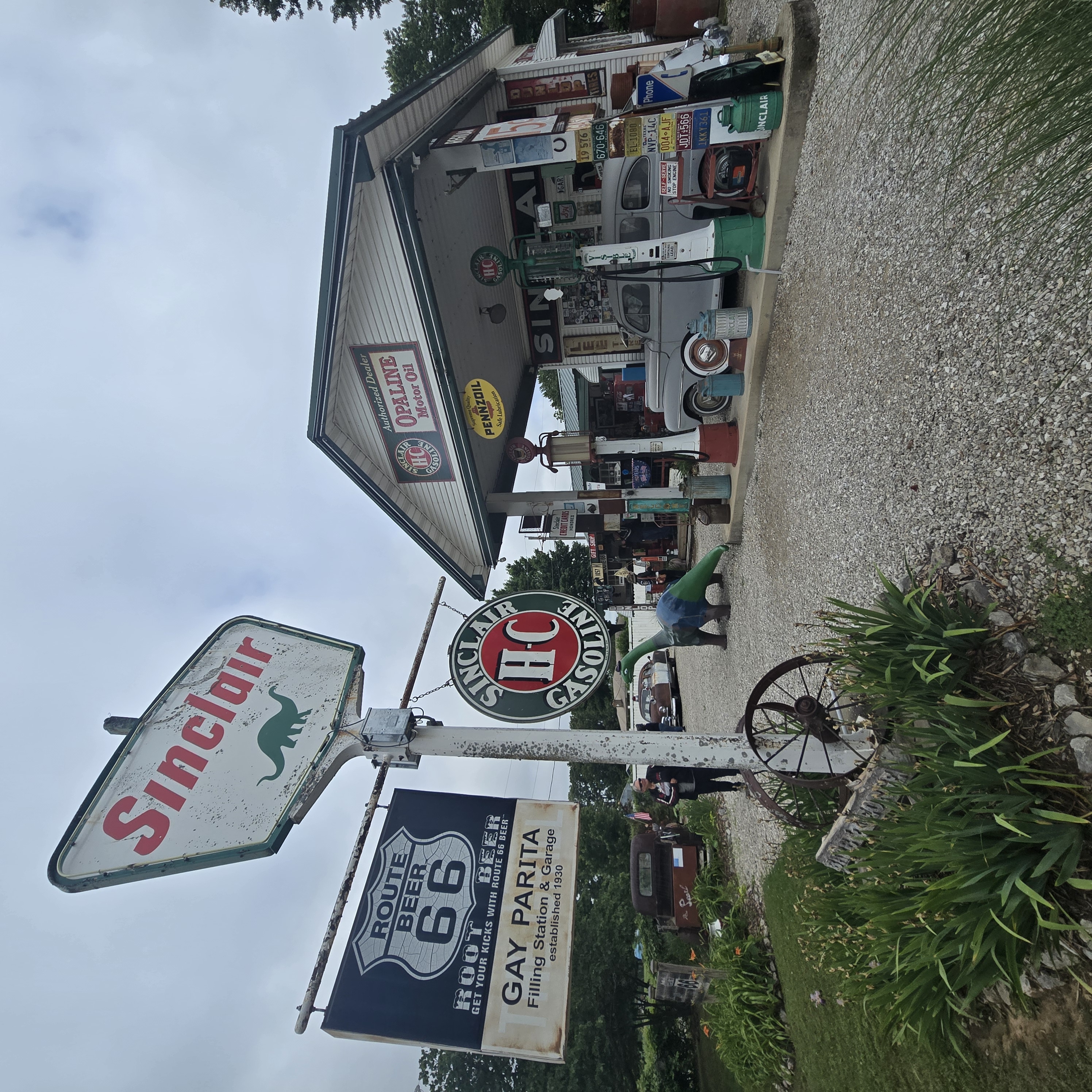
Gay Parita Filling Station outside Halltown is the first stop I'd put on any Route 66 itinerary. A meticulously restored 1930s station, staffed by volunteers who will talk to you for as long as you want to listen. The kind of place that makes you understand why people spend their lives preserving things like this.
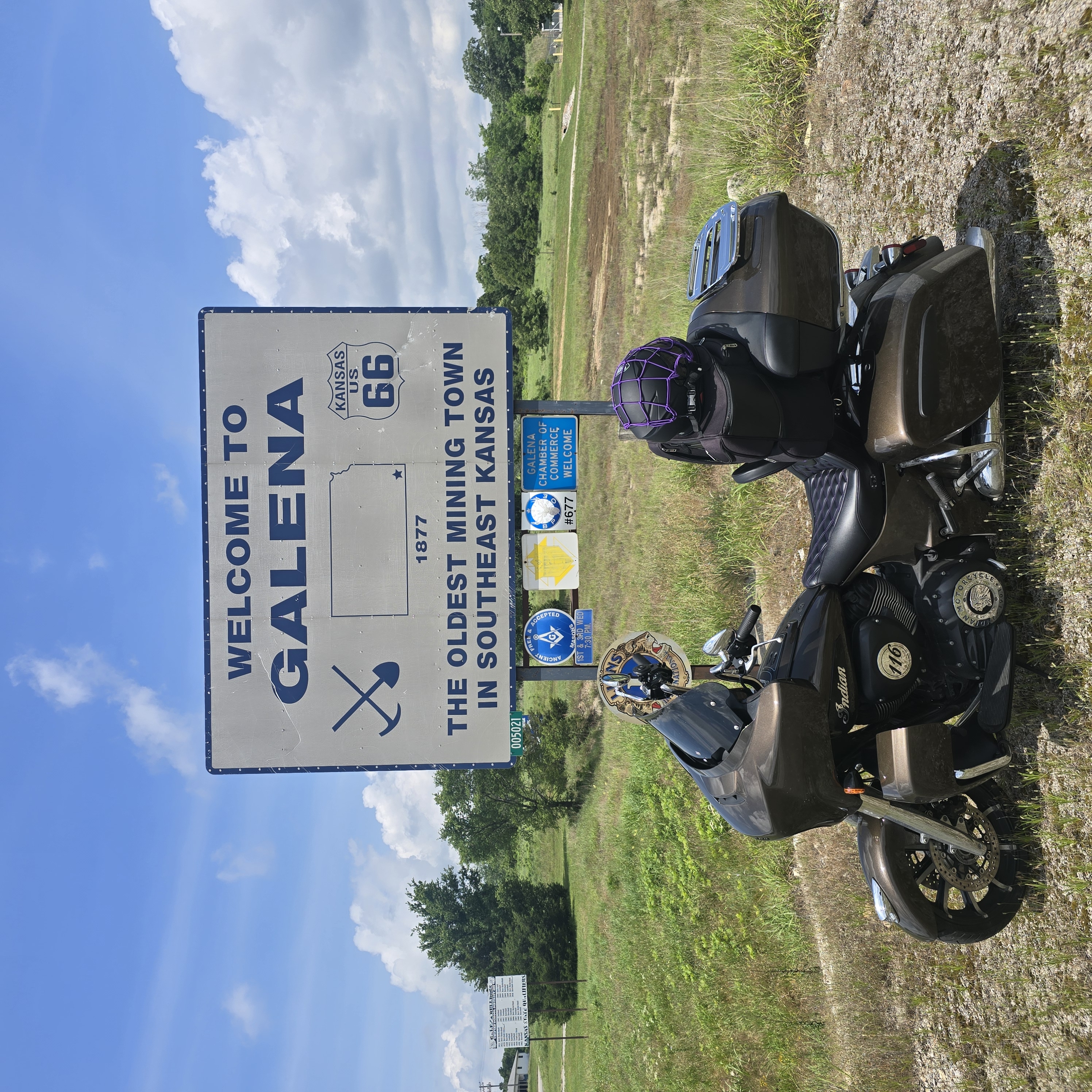
Galena, Kansas - technically just over the state line - gave me the inspiration for the "Tow Mater" truck from the movie Cars sitting in a field. A crowd of tourists around a tow truck. Only on Route 66.
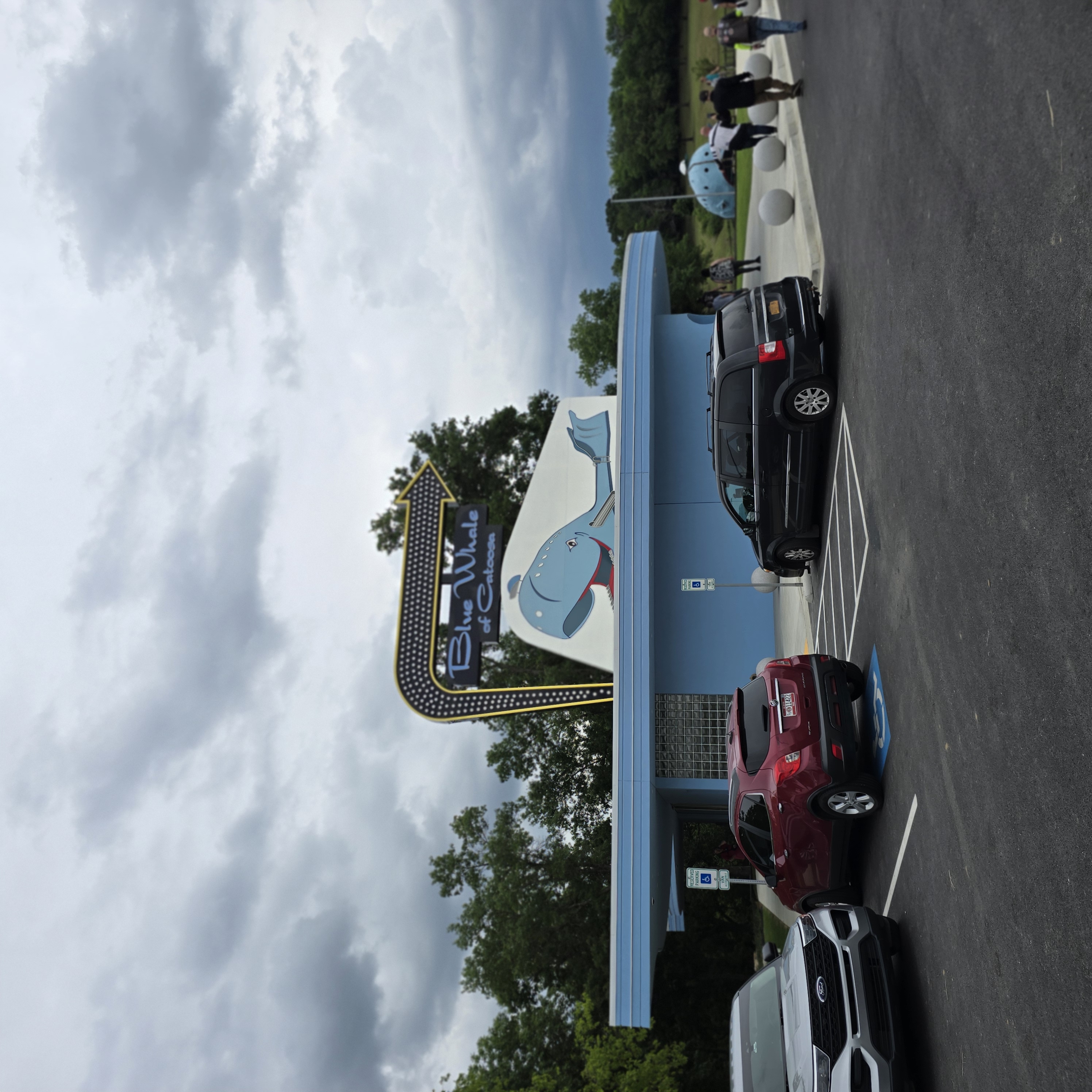
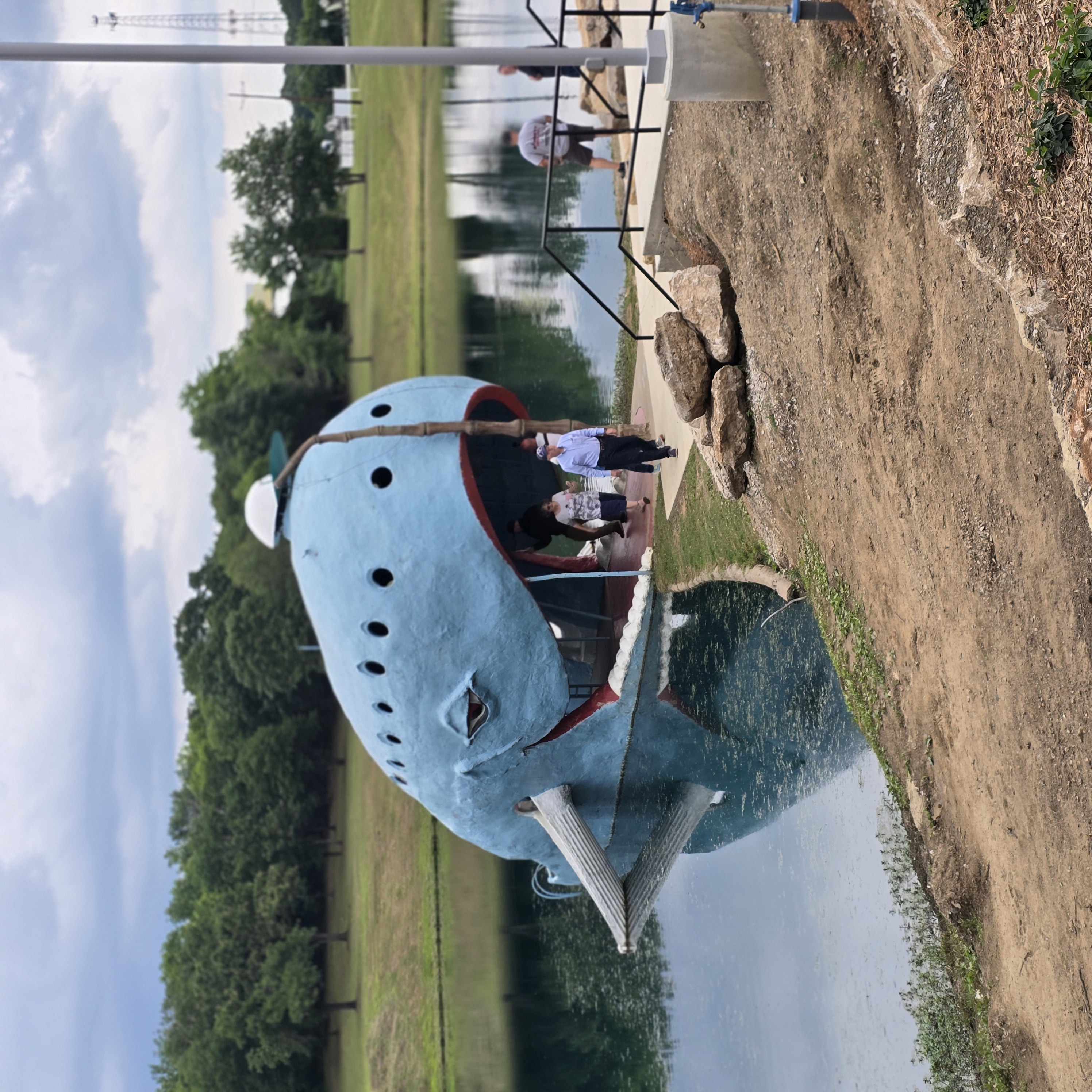
The Blue Whale of Catoosa might be the most surreal thing I've ever pulled up to on a motorcycle. A giant smiling whale rising out of a pond in somebody's backyard, painted blue, built by a man as an anniversary gift for his wife. America contains multitudes.
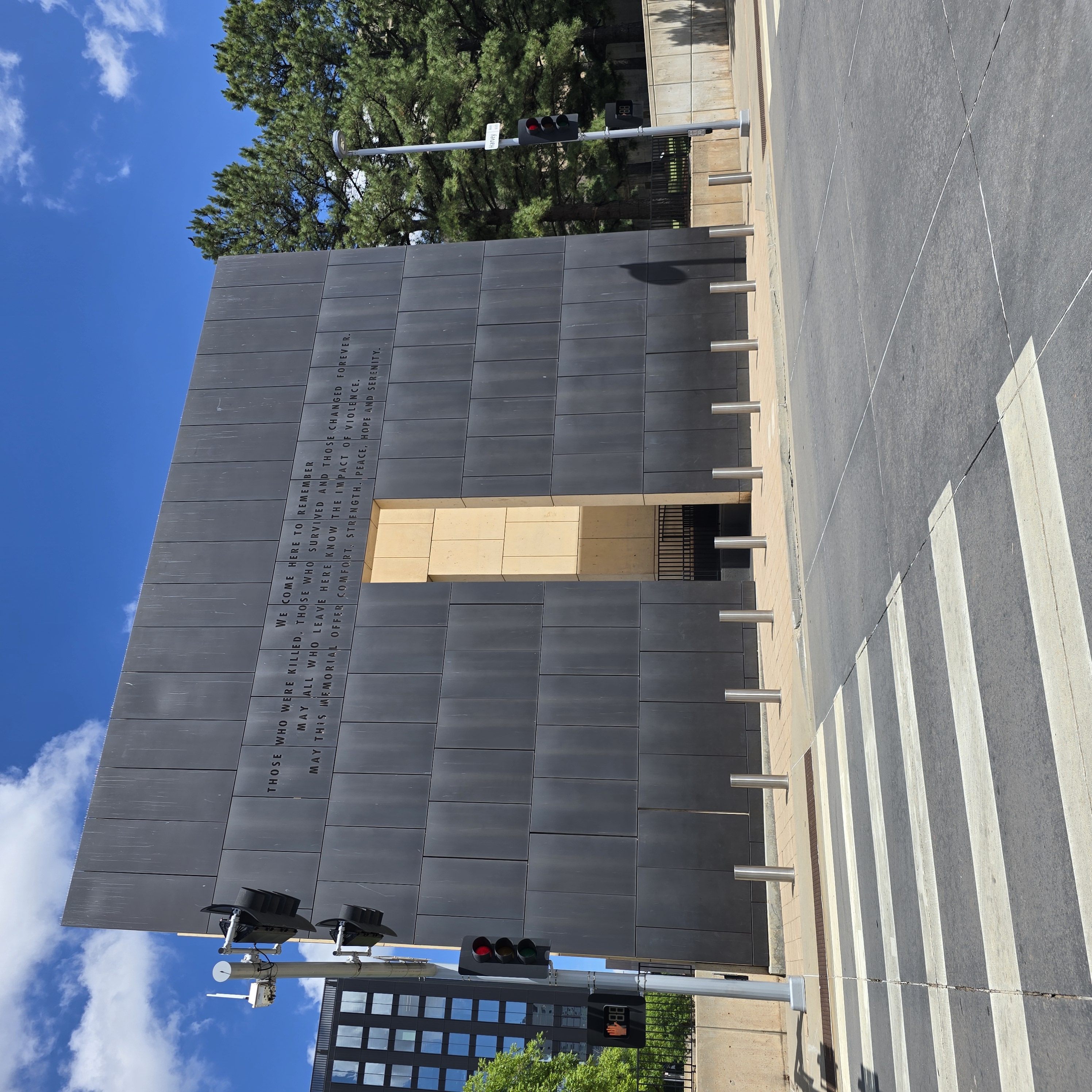
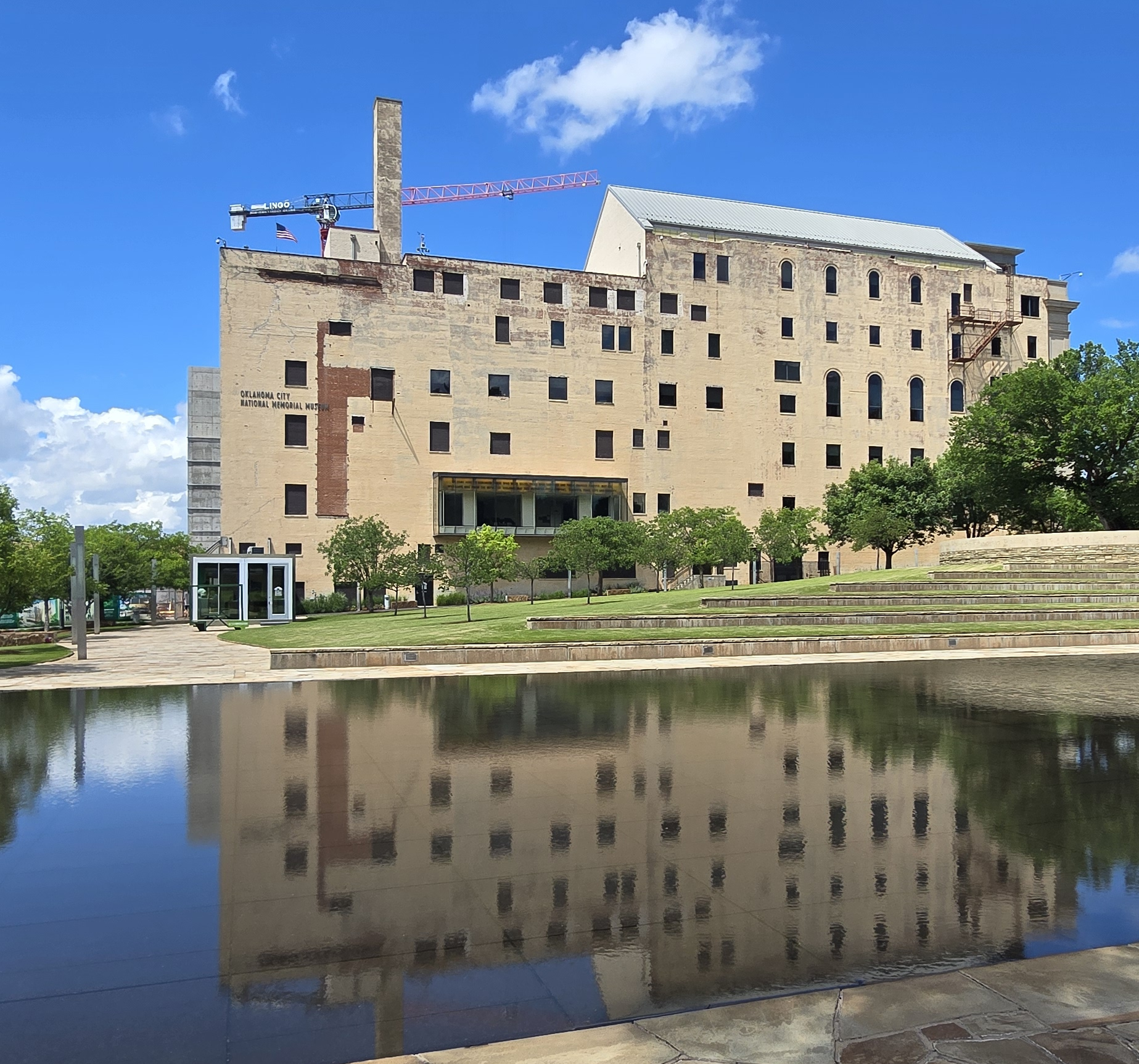
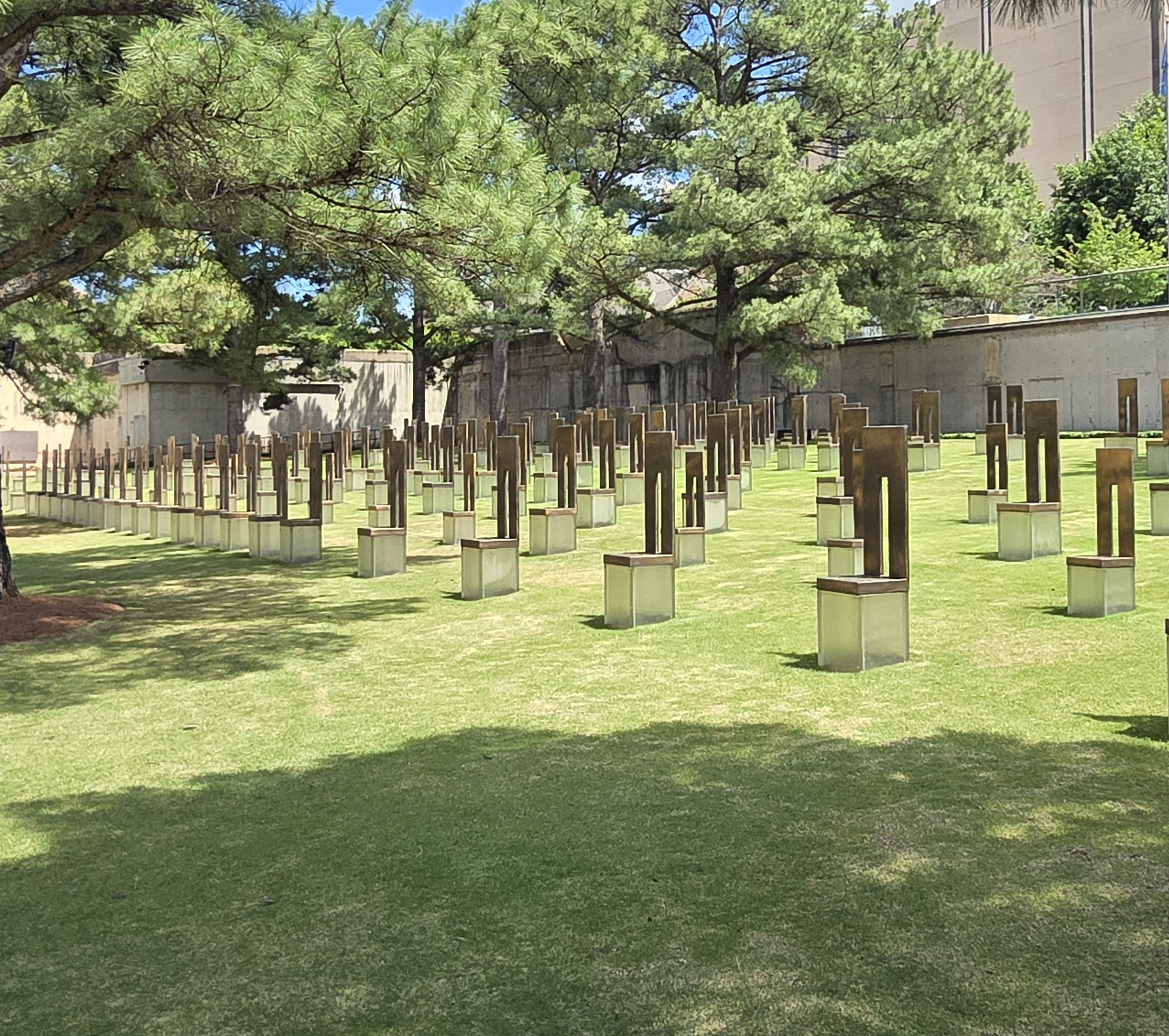
But it was the Oklahoma City National Memorial that stopped me. 168 chairs on a lawn, one for each person killed in the 1995 bombing. The smaller chairs for the children. You don't rush through a place like that. You stand there and you let it mean something.
Texas and New Mexico: The Sky Gets Bigger
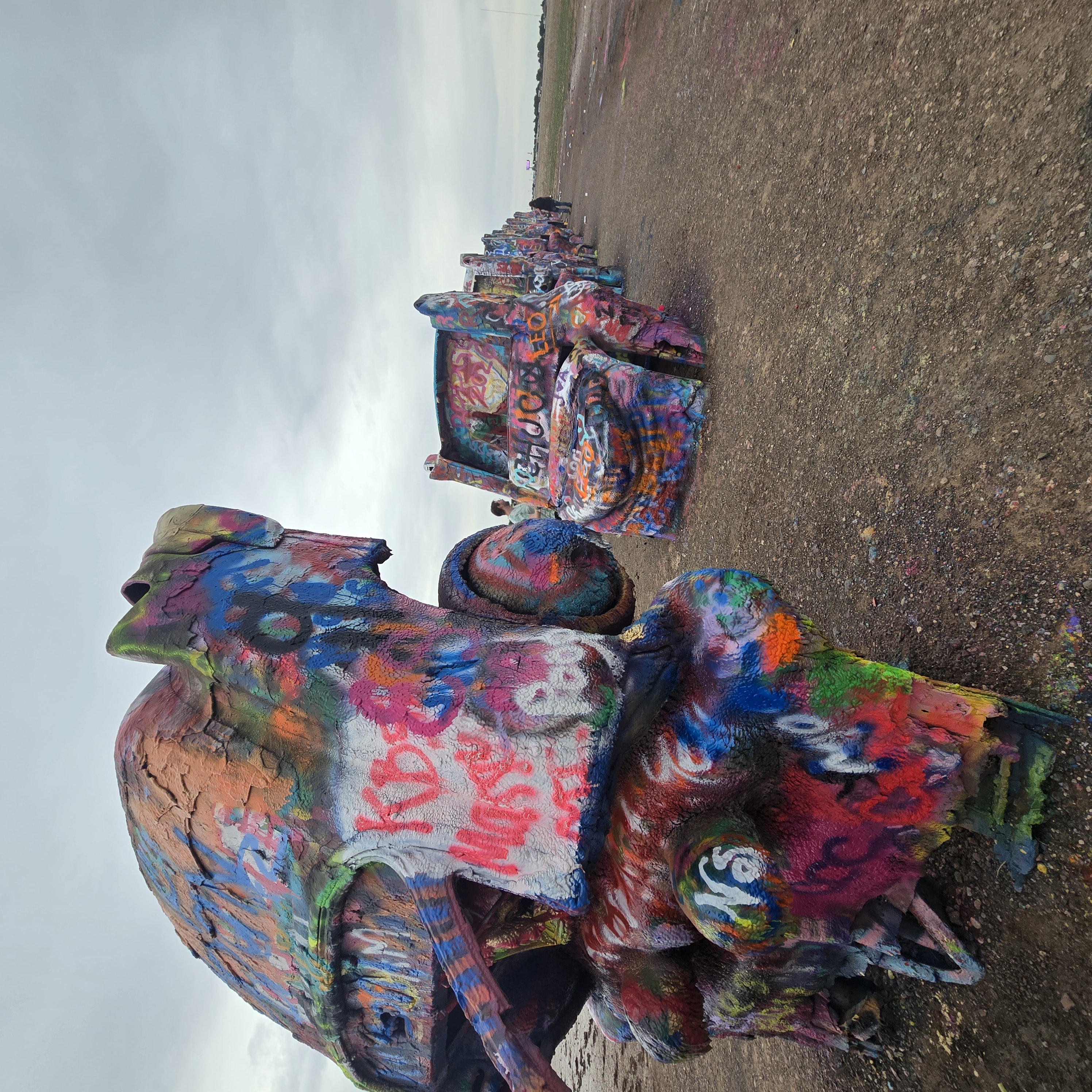
The Texas Panhandle is exactly as flat as advertised, and Cadillac Ranch is exactly as strange as photographed - ten Cadillacs buried nose-first in a field, spray-painted by thousands of visitors over the decades until they're thick with layers of color. It shouldn't work as art. Somehow it does.
Crossing into New Mexico, something shifts. The sky gets bigger. The light changes. The roadside architecture takes on a different character - adobe walls, hand-lettered signs, trading posts that have been selling turquoise and blankets since before the highway existed.
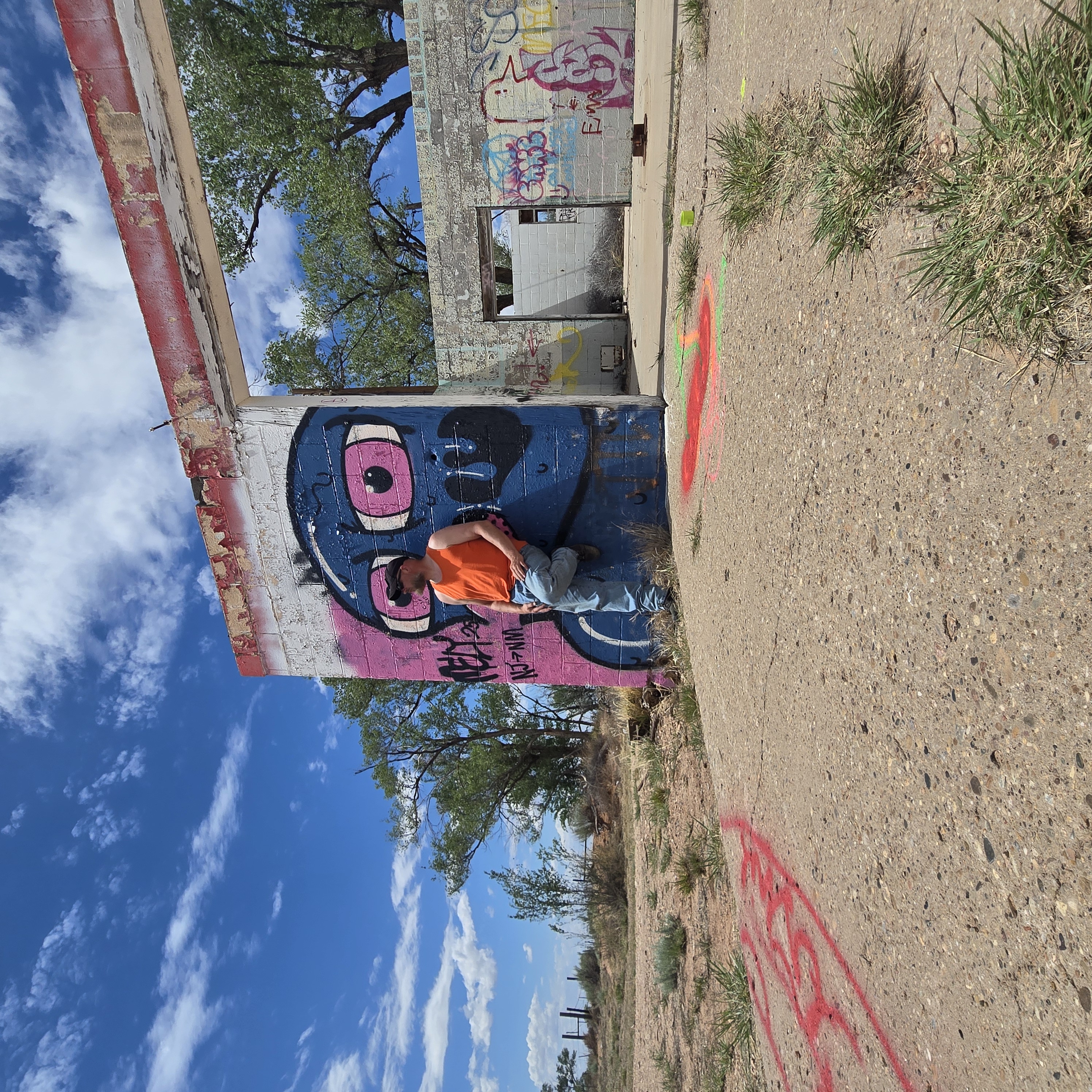
Tucumcari at dusk is one of the great Route 66 experiences. The neon signs come on as the sun goes down, and for a few minutes the whole street looks like a postcard from 1957. I sat outside my hotel and just soaked in the moment.
Arizona: The Road Earns Its Reputation
Arizona is where Route 66 becomes the thing people write songs about.
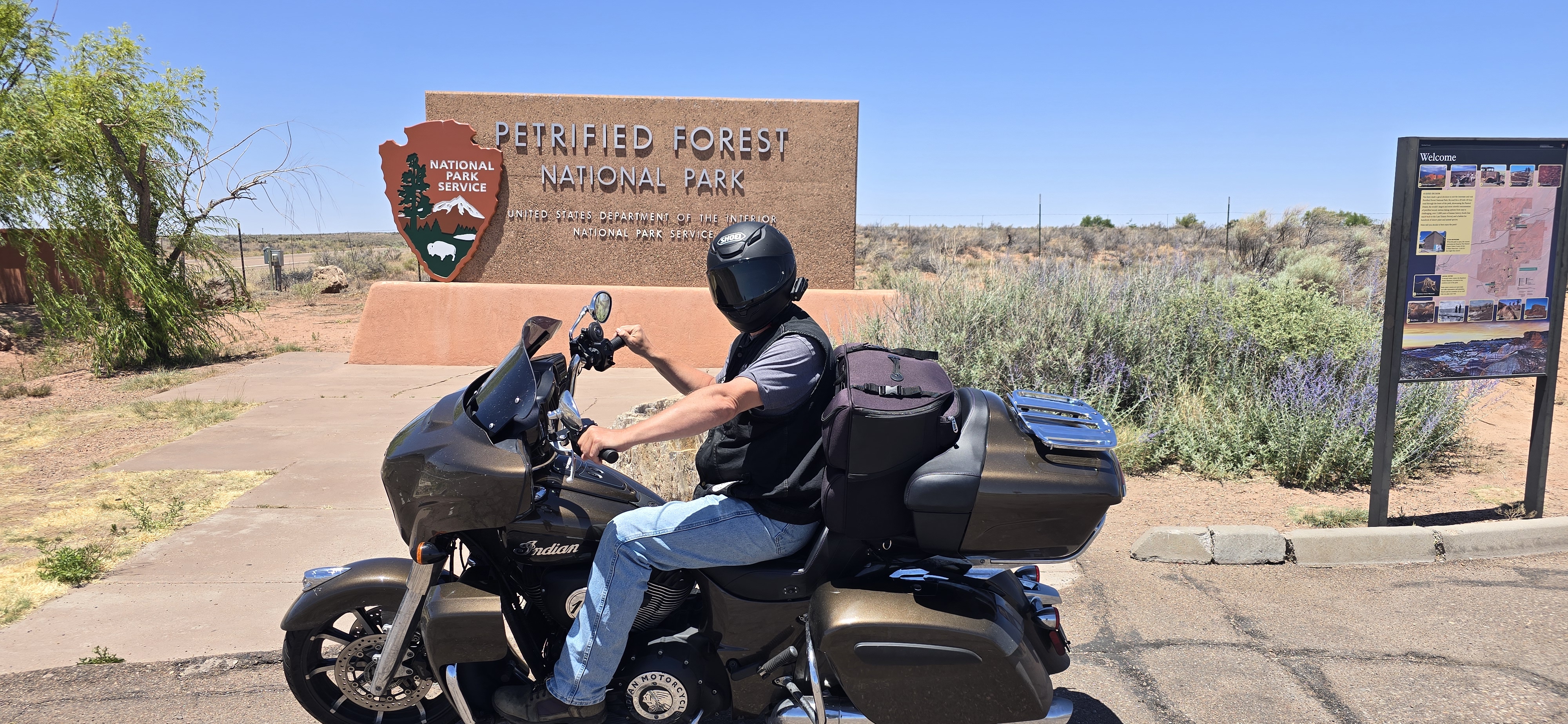
The Petrified Forest National Park pulled me off the highway for hours. Ancient wood turned to crystal over millions of years, scattered across a painted desert landscape that looks like something from another planet. I had not planned to stop. I could not make myself leave.
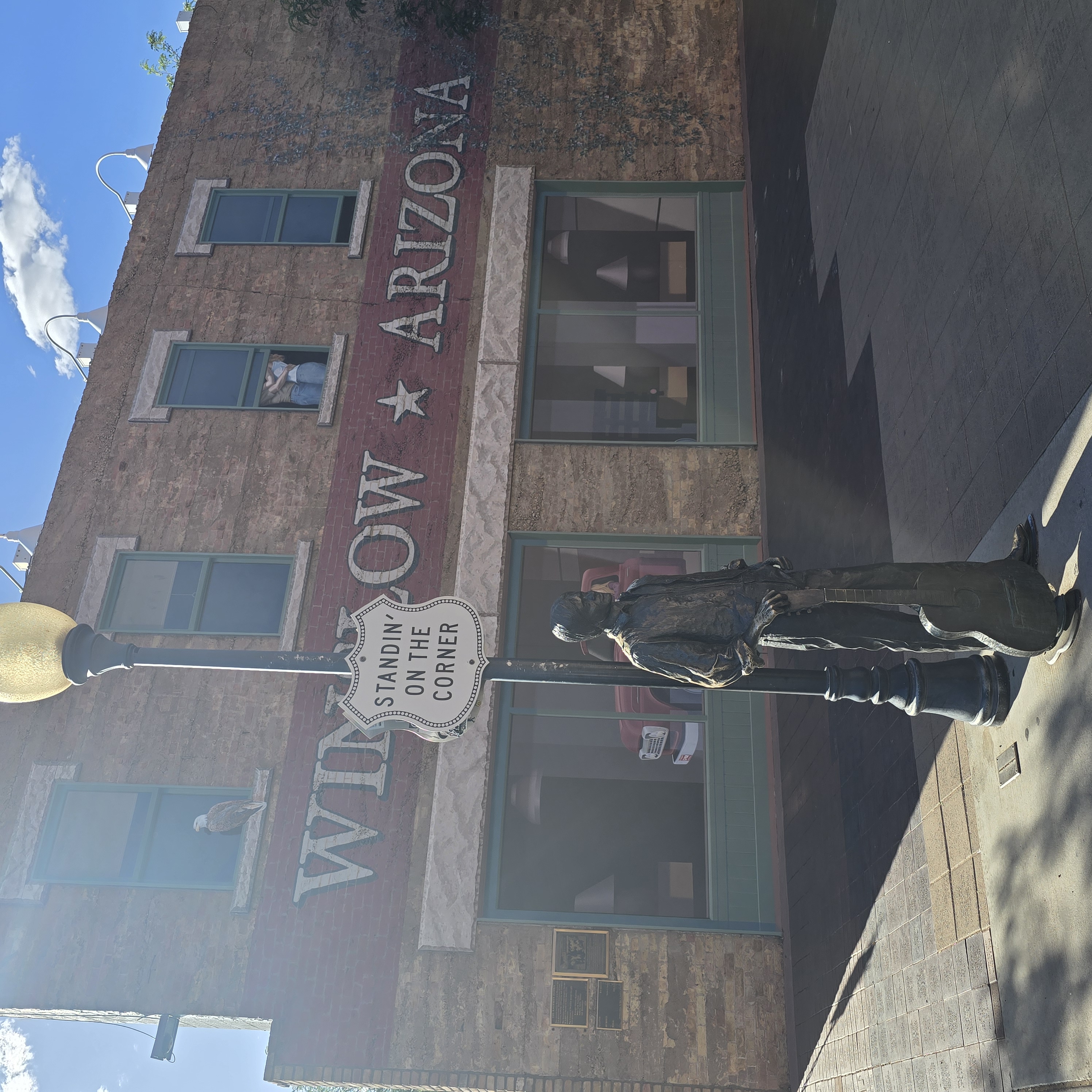
Winslow, Arizona. "Standing on a corner in Winslow, Arizona" - the Eagles lyric is literally painted on the corner where it happened. Tourists line up for photos. I lined up with them. No shame.
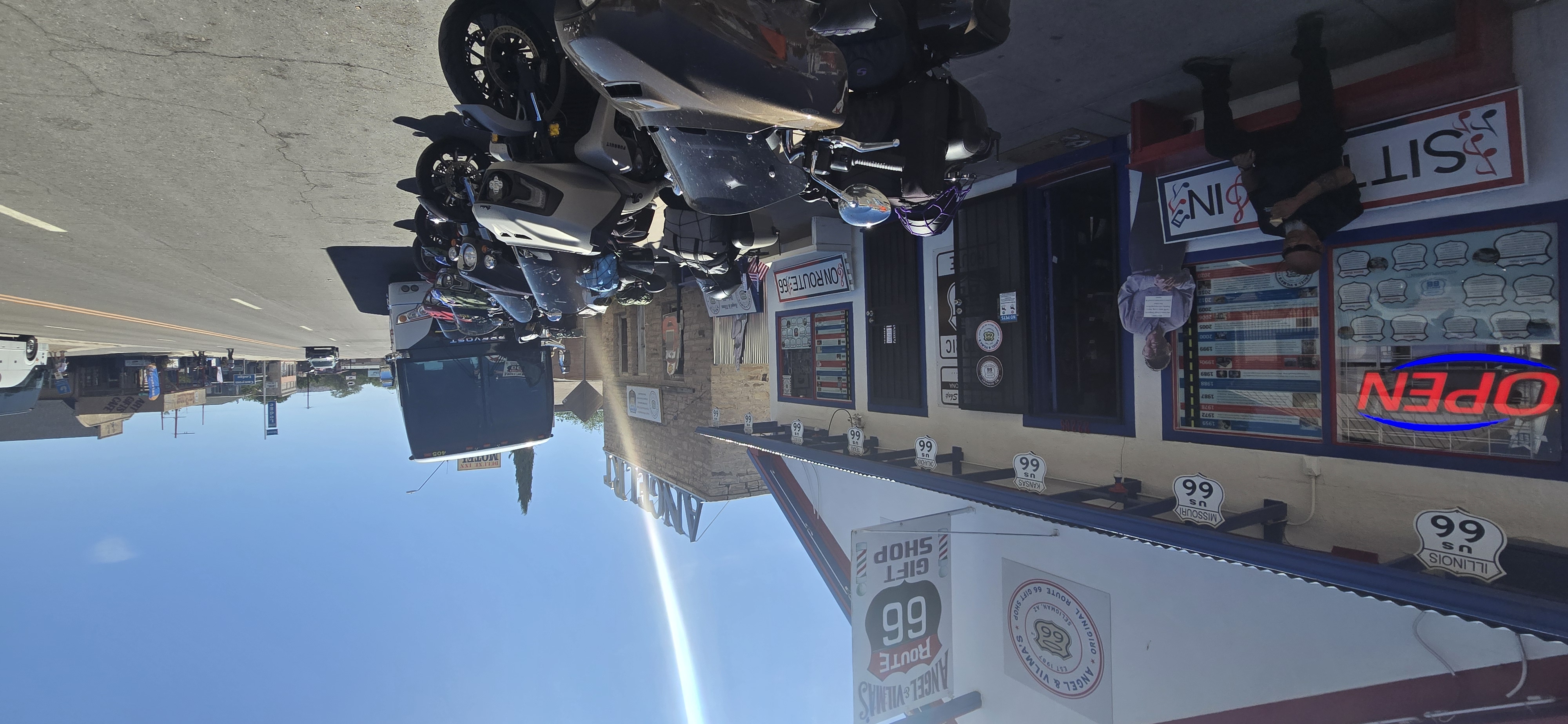
Seligman was where Route 66 fought back against the interstate system and won. When I-40 bypassed the town in the 1970s, it nearly killed Seligman overnight. A barber named Angel Delgadillo started organizing. He helped found the Route 66 Association of Arizona and sparked a preservation movement that saved the road from being forgotten entirely. Angel's Barbershop is still there. Angel himself was not in the day I passed through, but his legacy is everywhere.
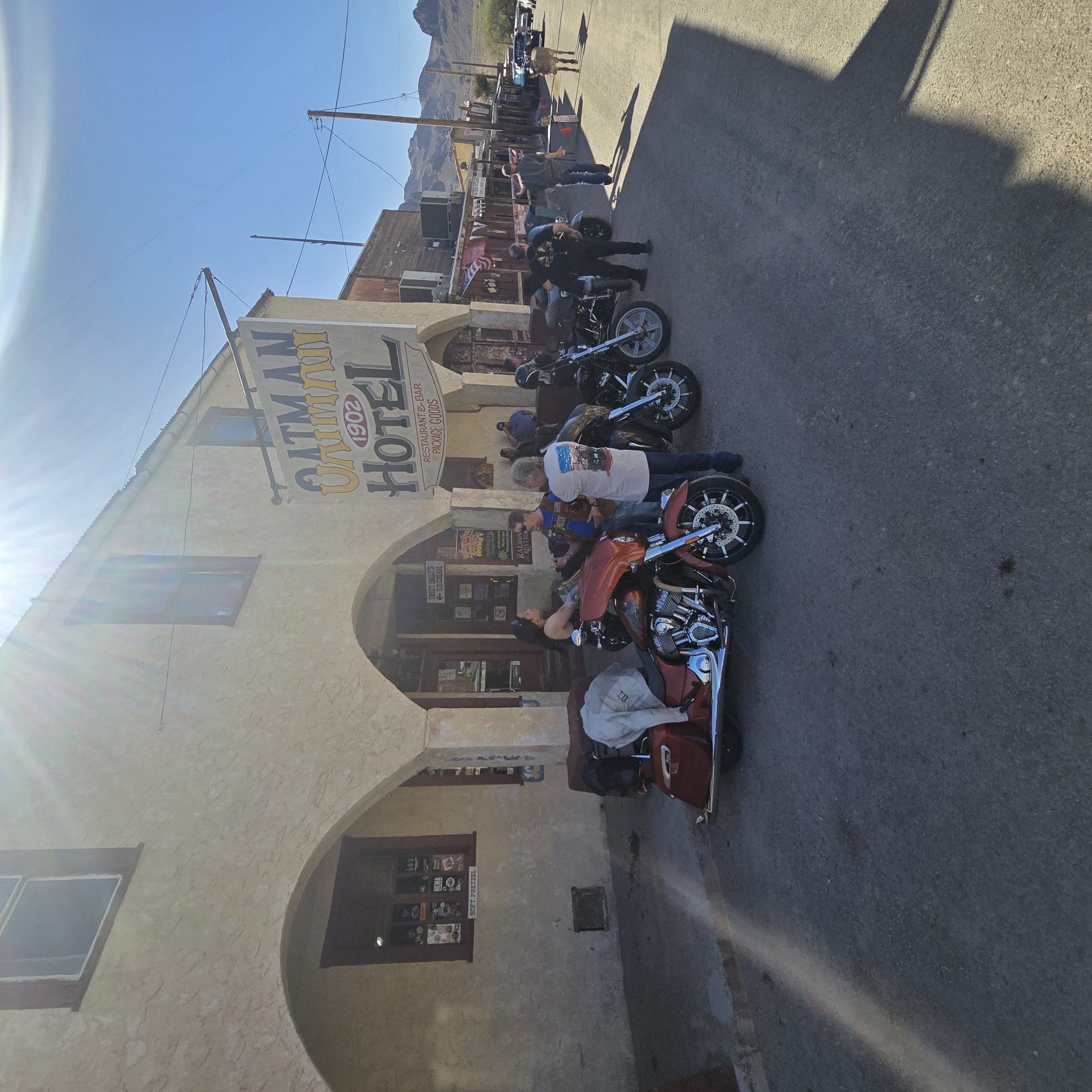
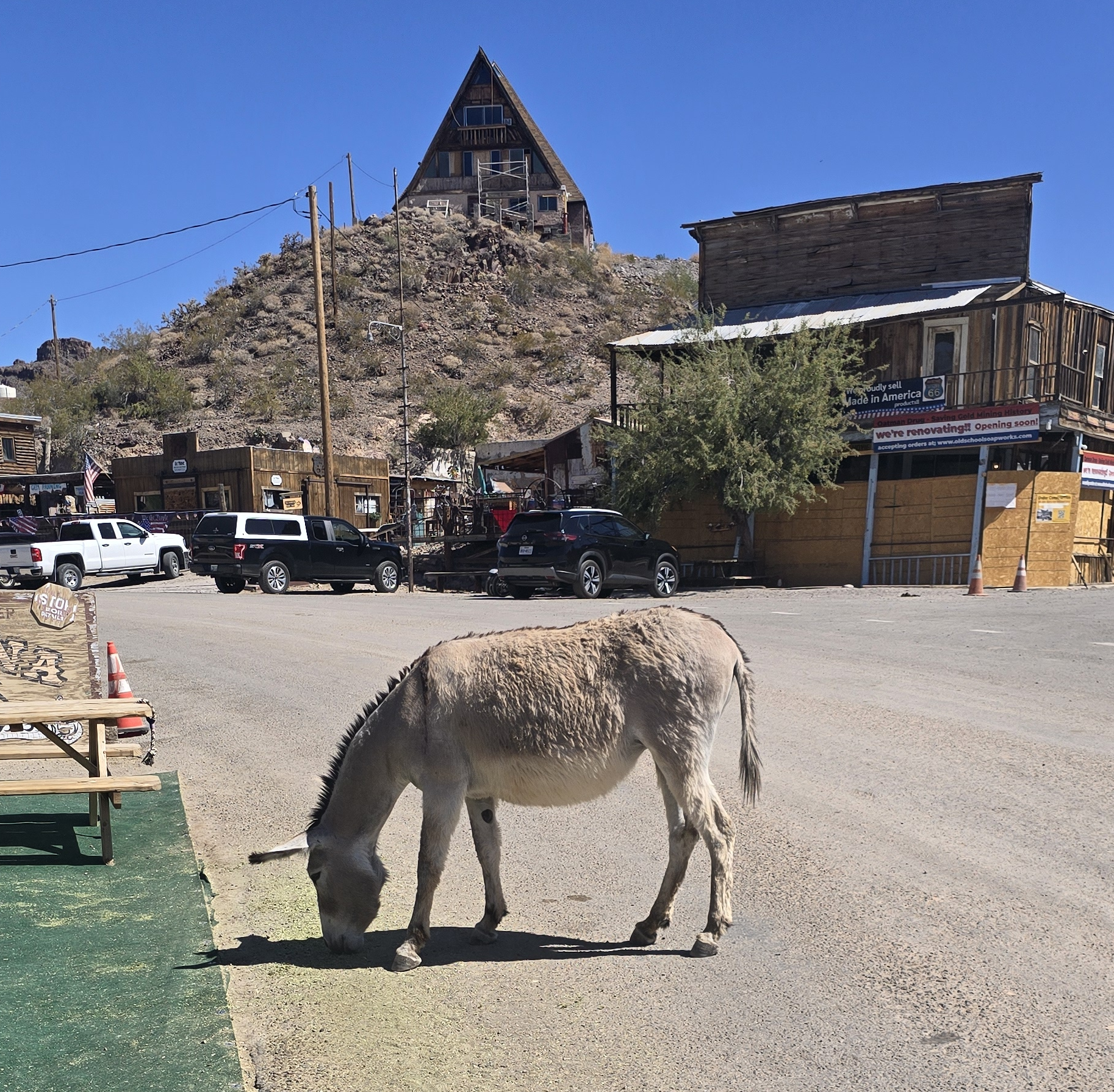
Oatman is a mining ghost town in the Black Mountains where wild burros wander the main street and tourists feed them carrots. It is completely ridiculous and completely wonderful. The road to get there - a series of hairpin switchbacks up and over the mountains - is some of the best motorcycling I've ever done.
California: The End of the Road
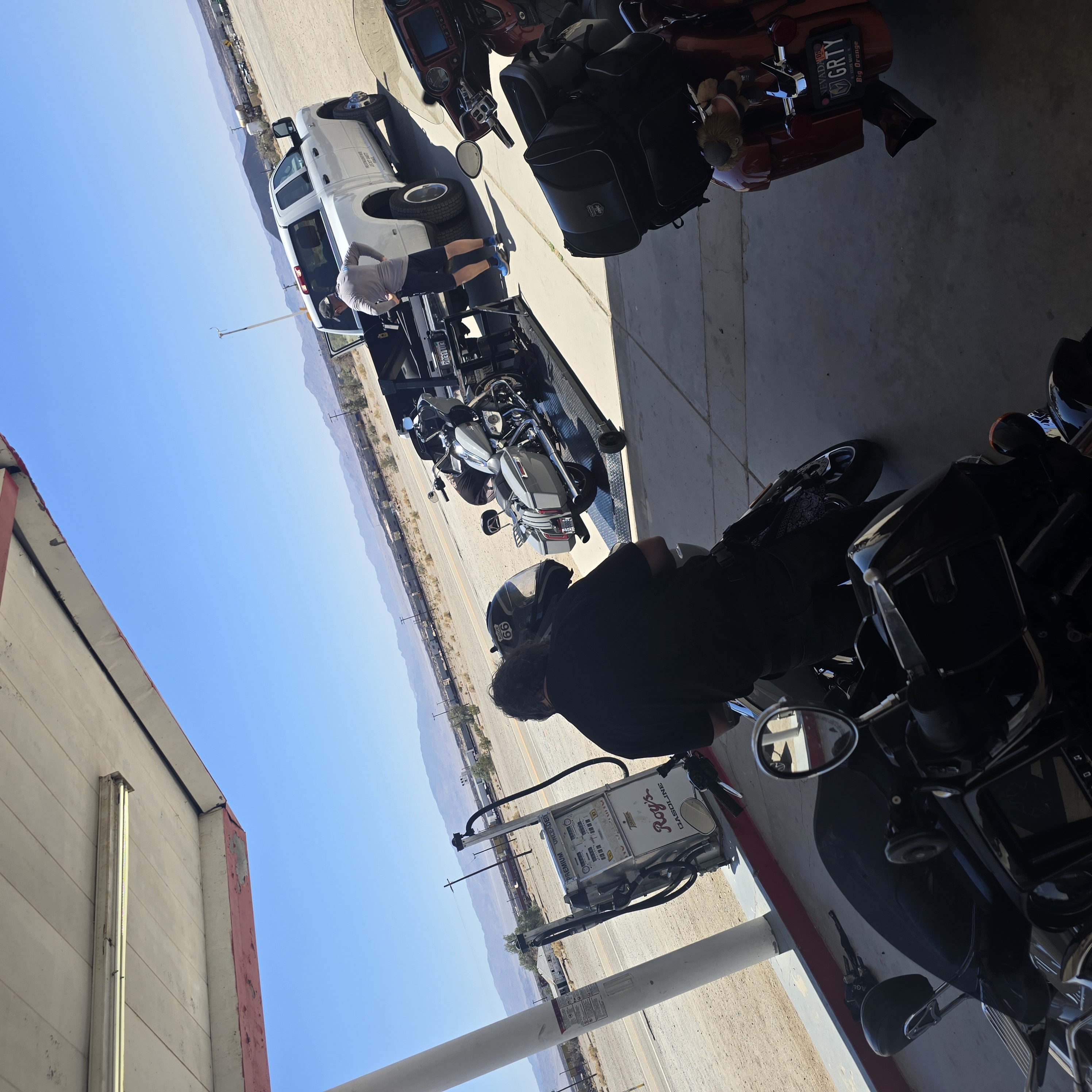
Roy's Motel and Cafe in Amboy is one of those places that feels like the last outpost before the end of the world. A classic googie-architecture sign rising above the Mojave Desert, a cafe, a motel, and a whole lot of nothing in every direction. I nearly ran out of fuel getting there. The sign was worth it.
Then the desert gave way to suburbs, suburbs gave way to the Pacific Ocean, and Route 66 ran out of road at the Santa Monica Pier.
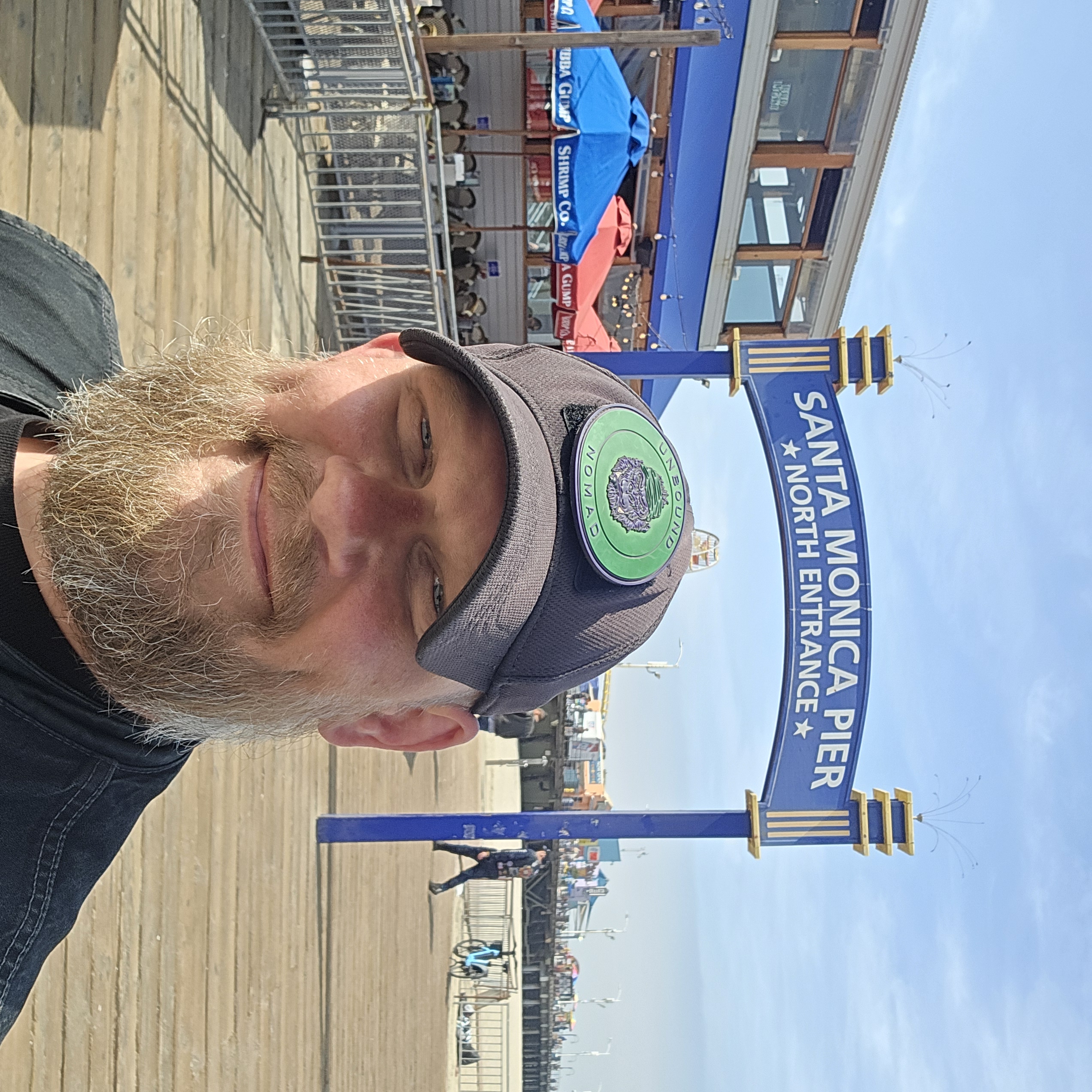
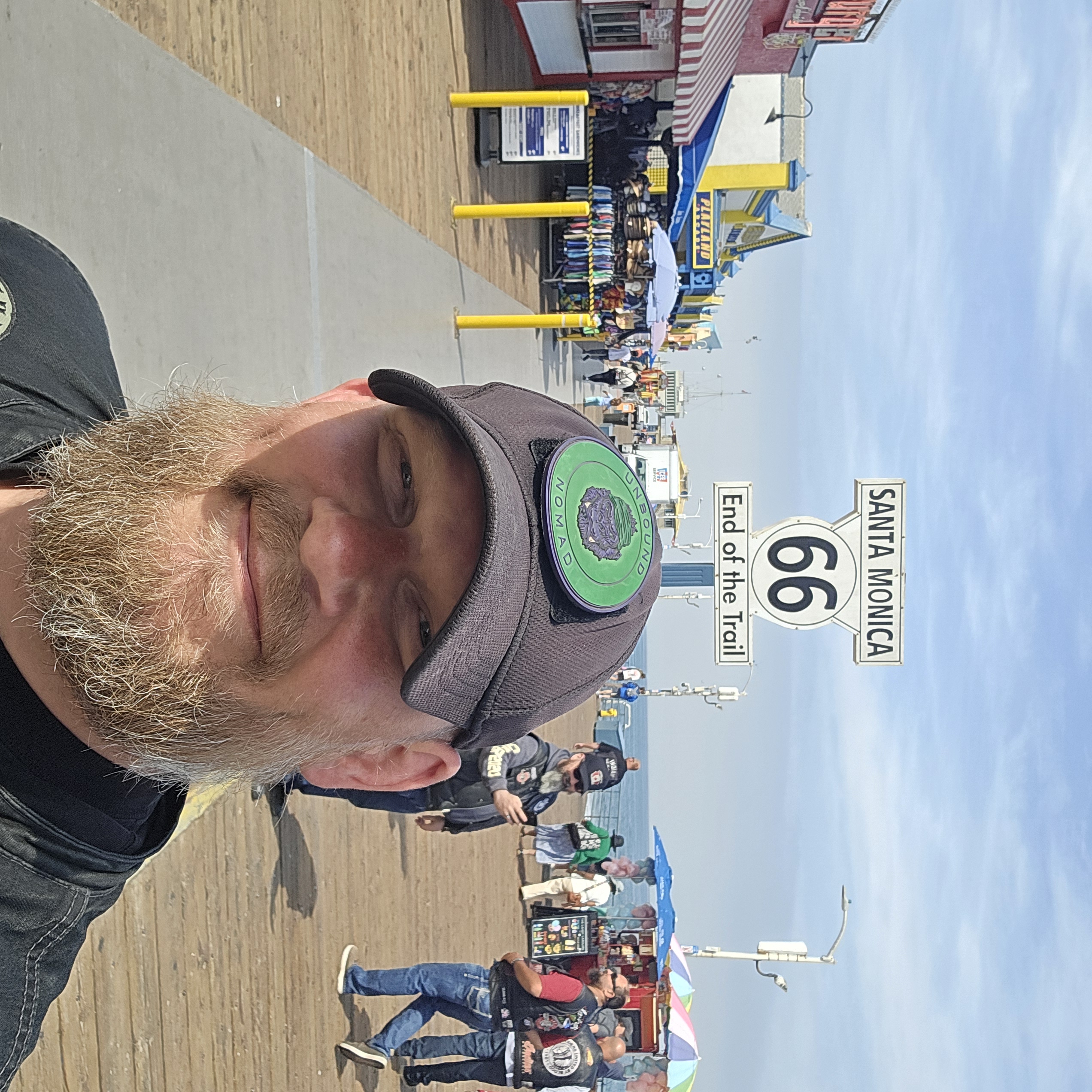
I rode to Huntington Beach instead - a personal choice, a place that meant something to me. I sat on the sand and looked at the Pacific and thought about the fact that I had ridden here from Ohio. That I had done this thing I said I was going to do.
What Route 66 Is
Route 66 is not a theme park. It's not a museum, and it's not a shortcut. At its best, it's a living record of the country that built it - the optimism, the tragedy, the kitsch, the genuine beauty, the people who refused to let it disappear.
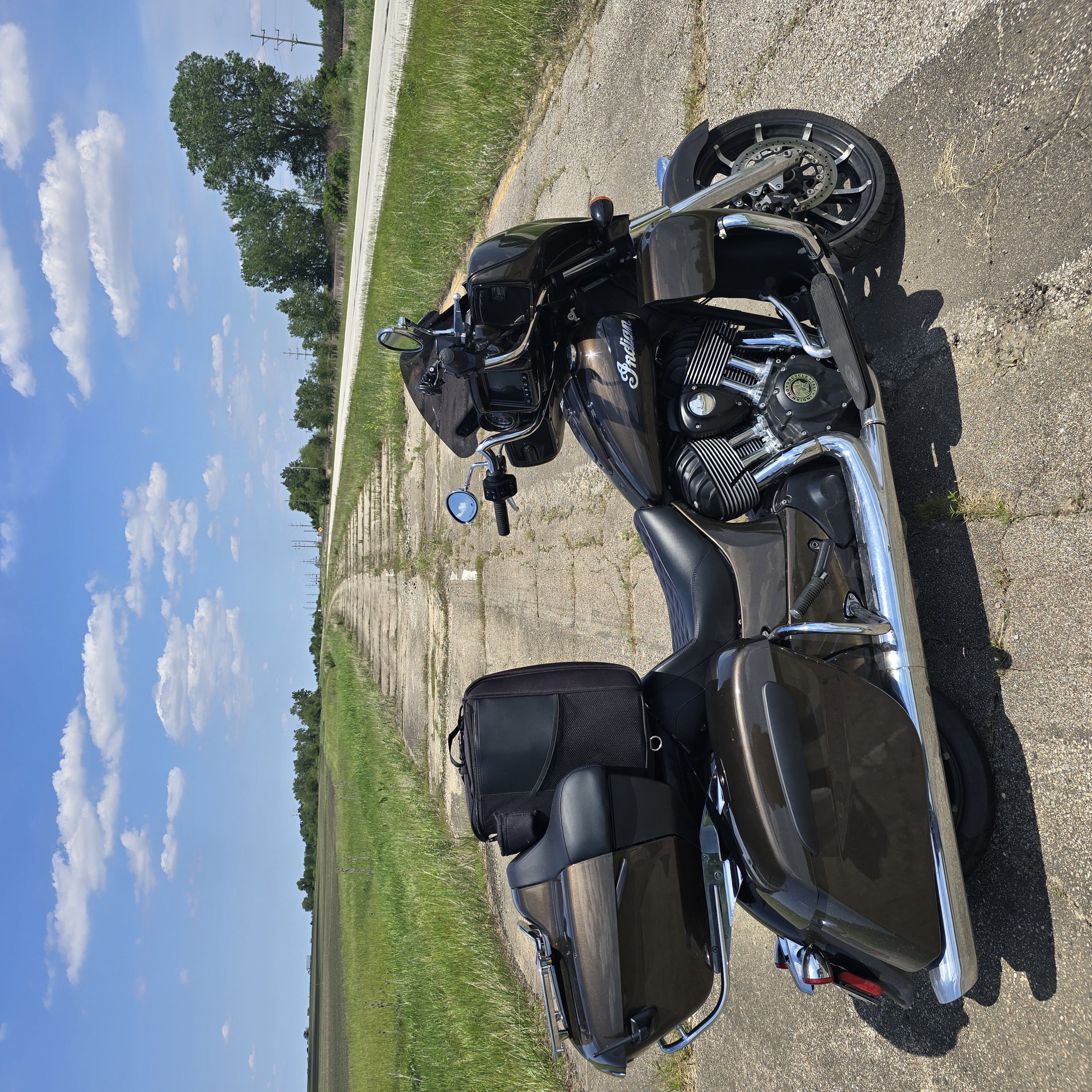
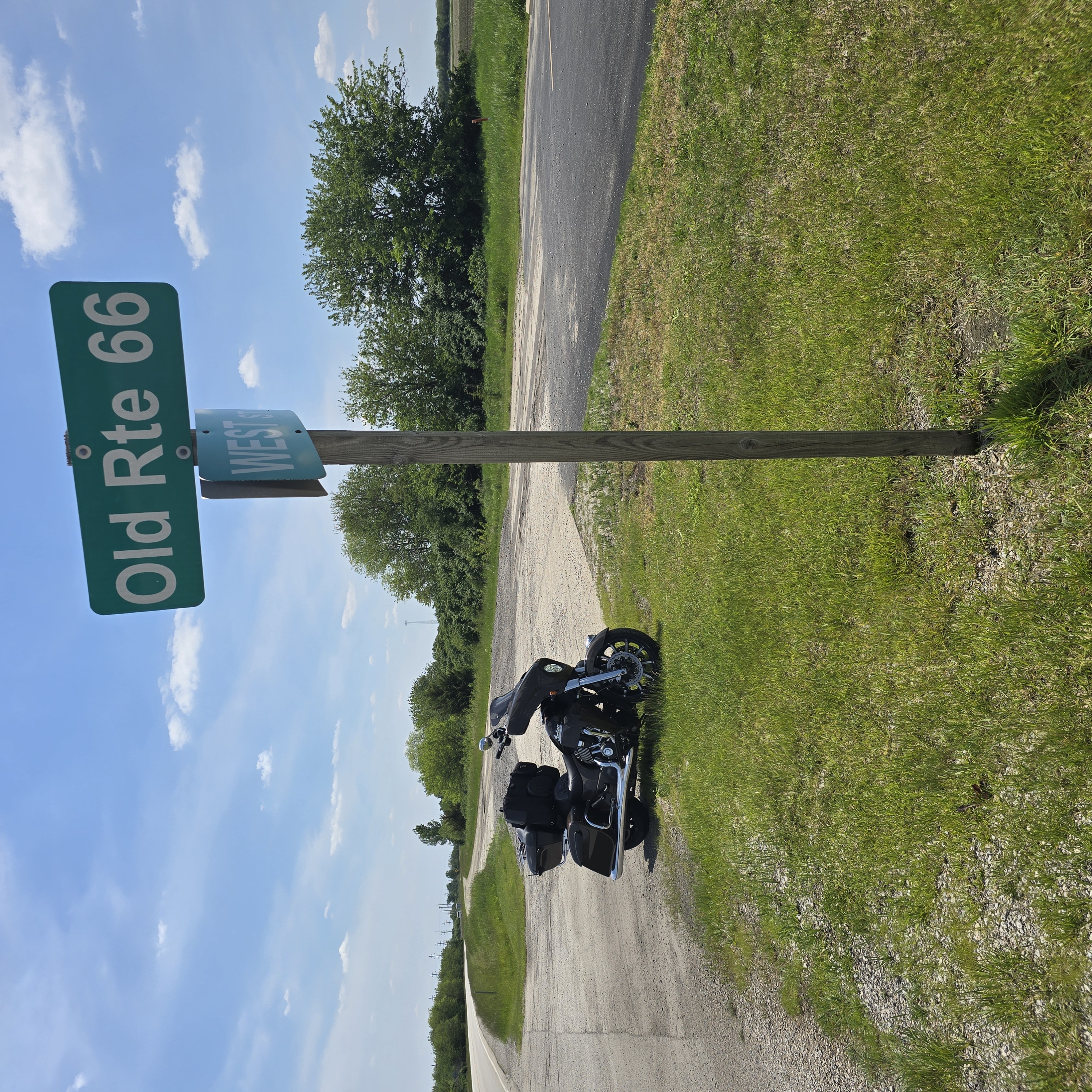
Riding it end to end, slowly, stopping when something catches your eye, talking to the people who maintain these places and tell these stories - that's the only way to do it. You can drive it in a weekend if you push. You'd miss everything.
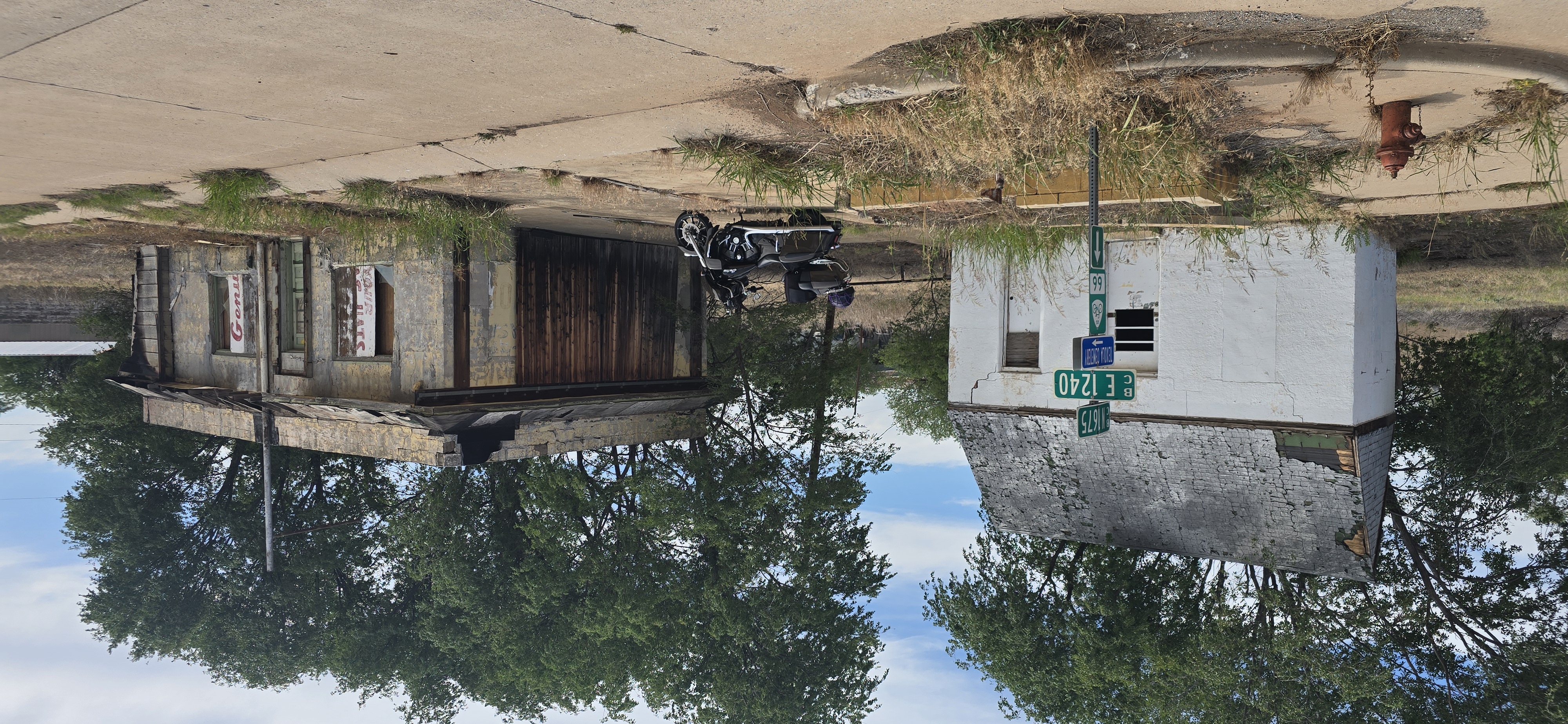
Take your time. The road will wait.
This ride was a 26-day motorcycle journey from Delaware, Ohio to Huntington Beach, California and back. This is Part 1 of a 6-part series.