The High Desert: Page, Monument Valley, and Four Corners
Posted on Tue 30 June 2026 in Rides
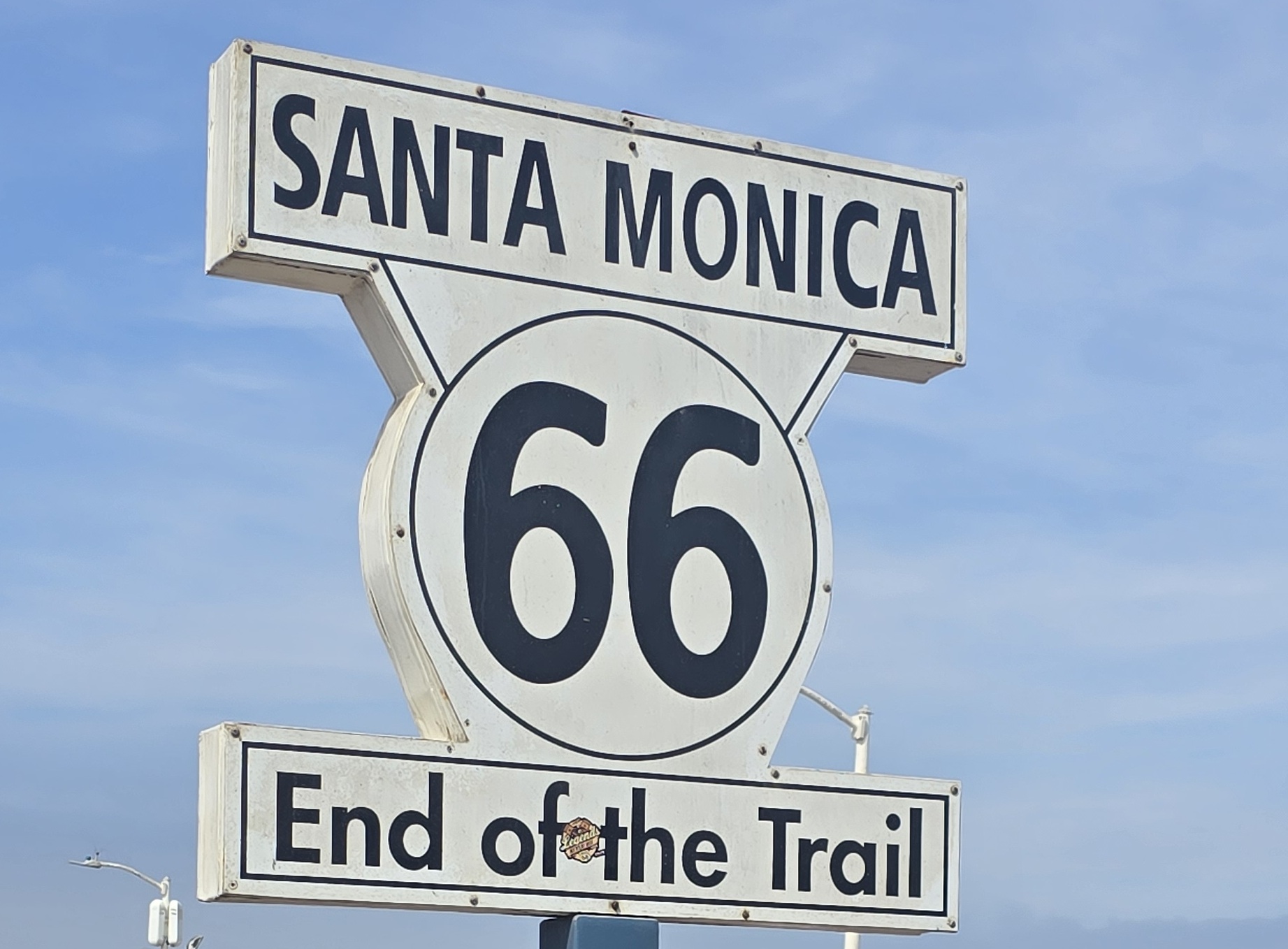
Leaving the Pacific behind is a strange thing.
You've ridden to the edge of the continent. The ocean is right there. And then you turn around and ride back into it - back into the heat, the distance, the American interior. The return leg of a long trip has a different feel than the outbound one. The urgency is gone. You've done the thing. Now you're just riding.
What I didn't expect was how much the ride home would rival the ride out.
Turning East
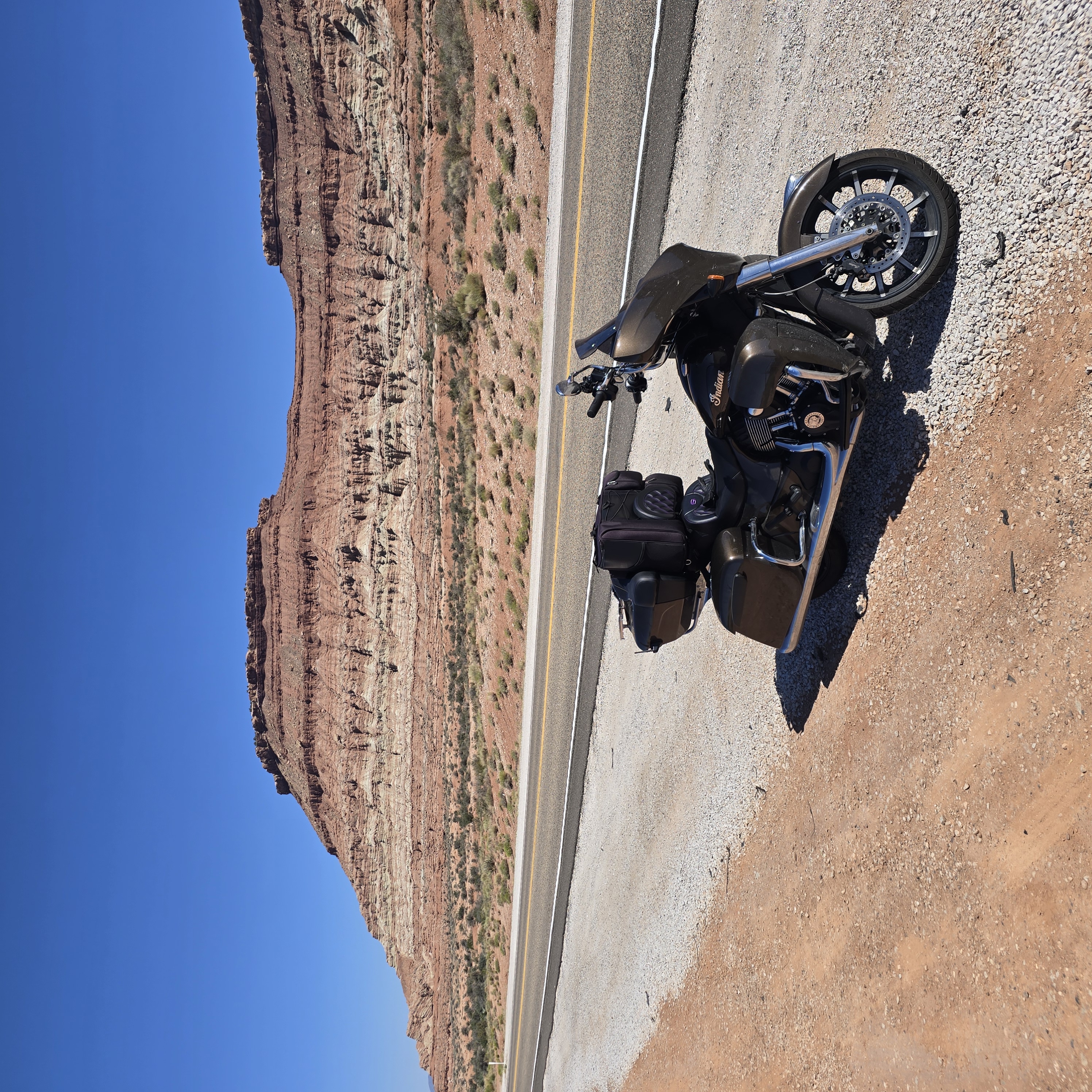
The desert begins almost immediately once you leave the coastal basin. Southern California has a way of hiding how close the wilderness really is - a few miles of suburb and then suddenly you're in it. The temperature climbs. The landscape opens up. The road stretches ahead in a way that feels both endless and clarifying.
I pointed Lozen east and let the miles come.
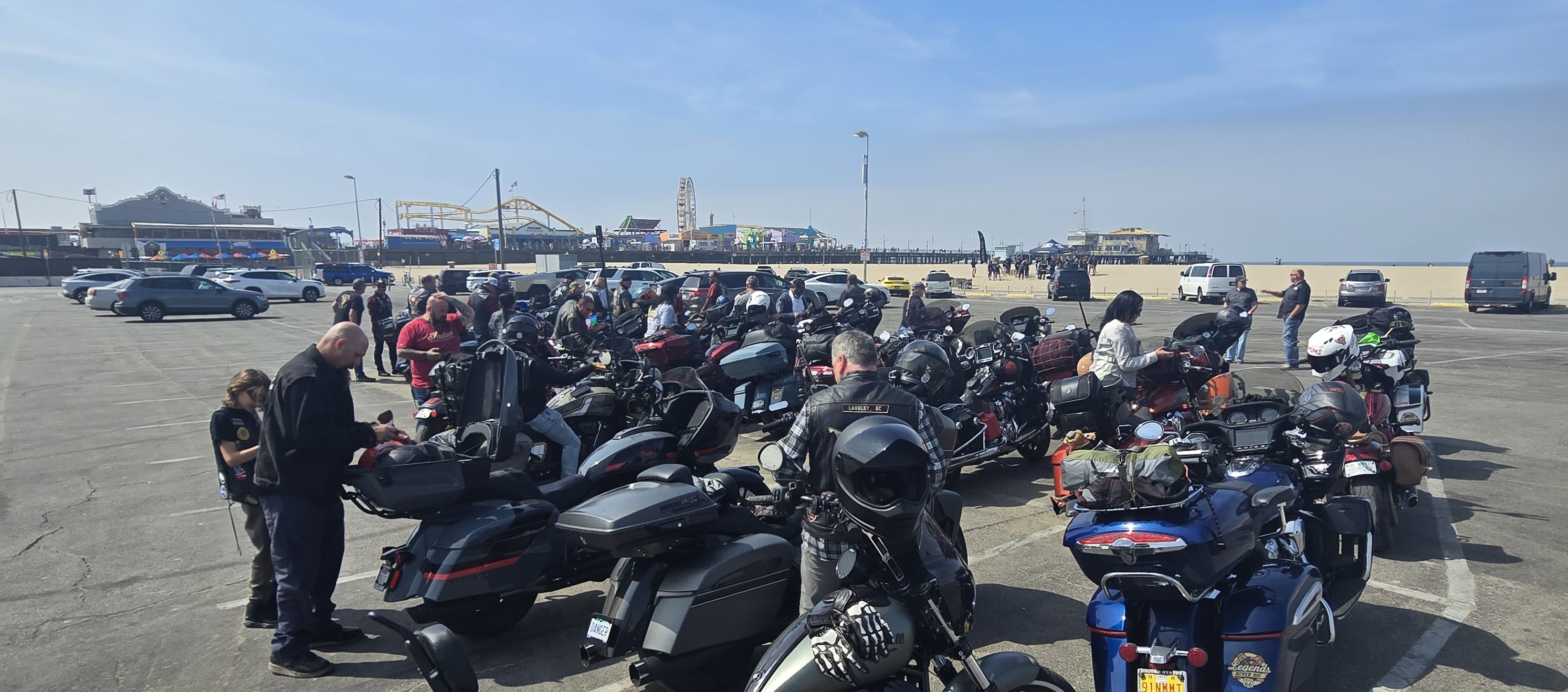
Navajo Bridge
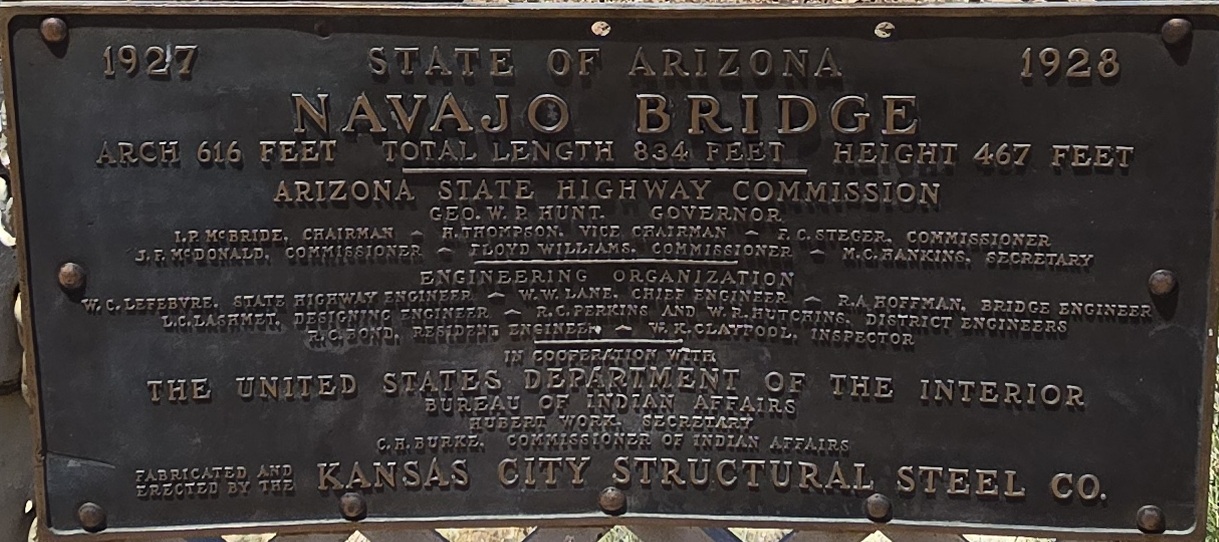
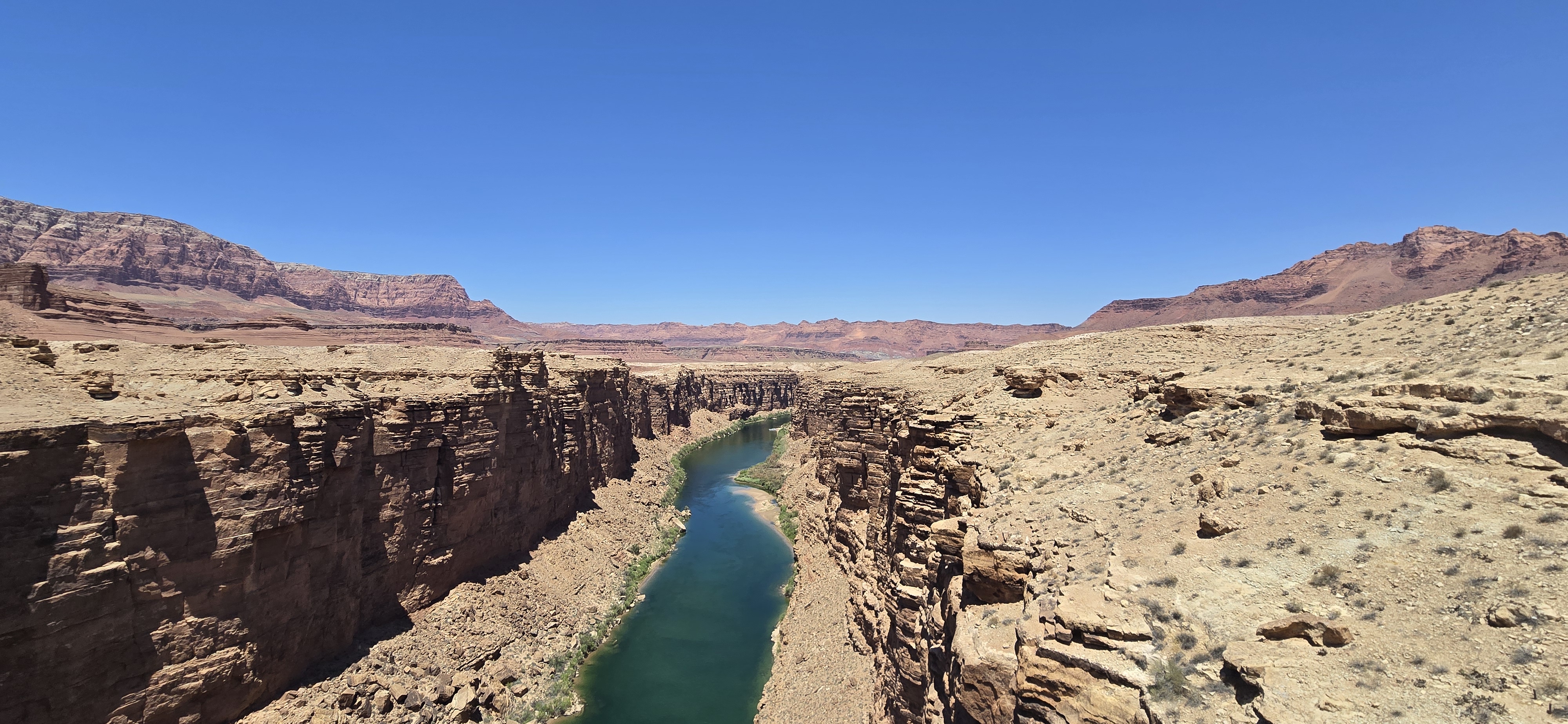
The Navajo Bridge spans the Colorado River at Marble Canyon, Arizona - 467 feet above the river, in the heart of Navajo Nation. There are actually two bridges: the original 1929 span, now a pedestrian walkway, and the newer crossing built in 1995 that carries traffic.
I walked the old bridge.
Looking down at the Colorado River from that height - the deep red canyon walls dropping away on both sides, the green water threading through far below - is one of those moments that resets your sense of scale. The canyon doesn't care about your schedule or your mileage. It's been here longer than anyone can really comprehend, and it'll be here long after.
I stood there longer than I planned to.
Page, Arizona
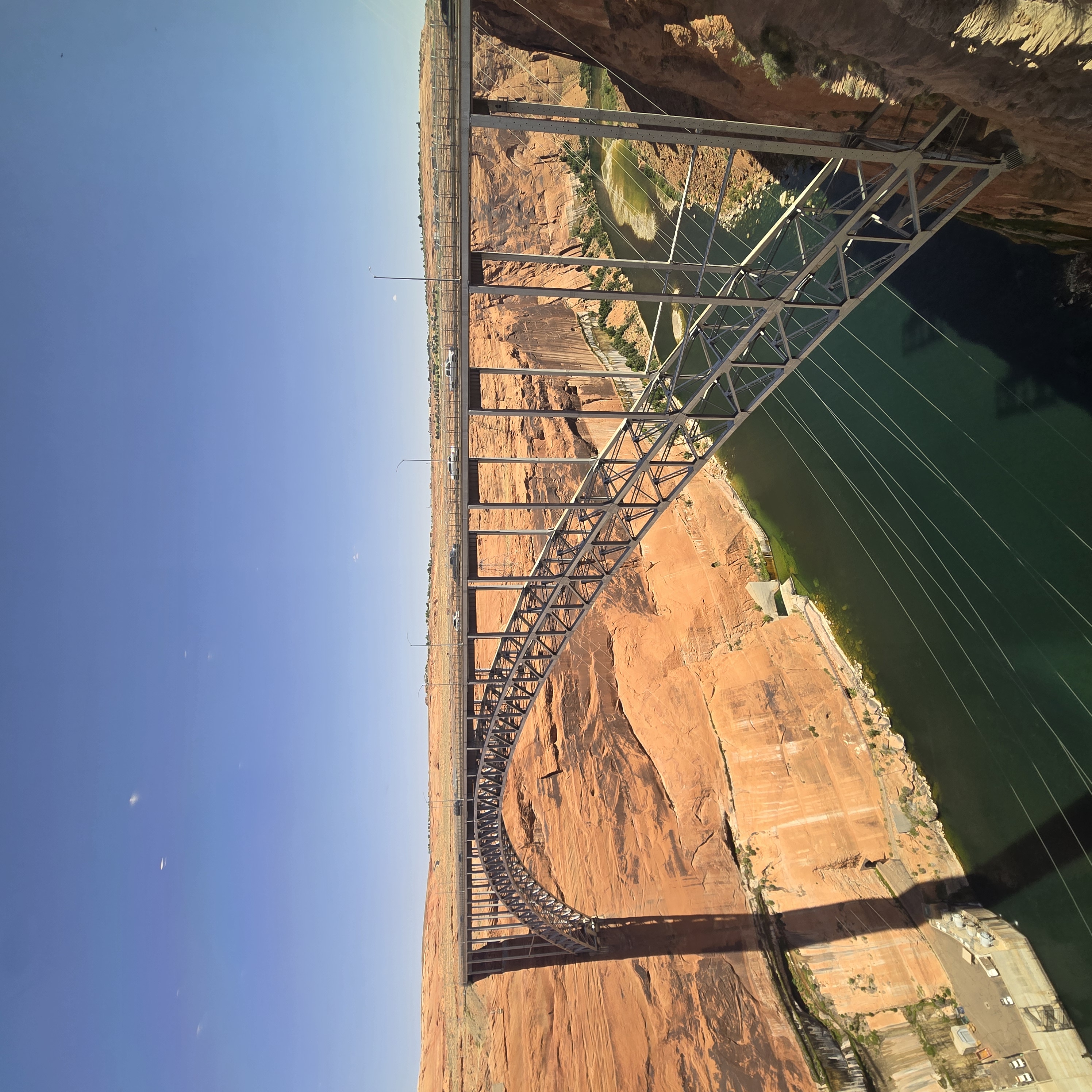
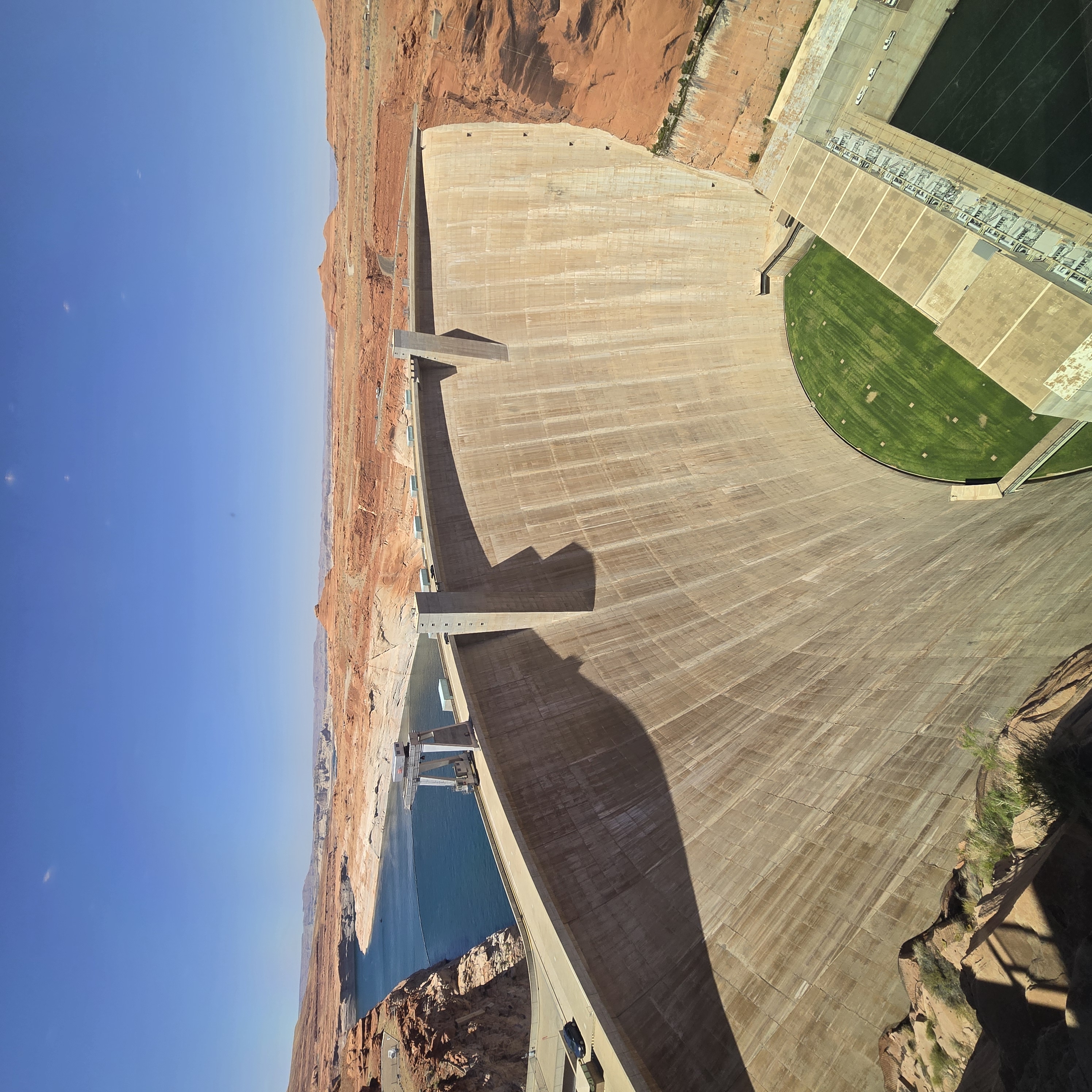
Page sits on a mesa above Lake Powell and Glen Canyon, and it serves as a gateway to some of the most photographed landscapes in the American Southwest. I rolled in after 191 miles with the elevation climbing to nearly a mile - noticeably cooler than the desert floor, which was a relief.
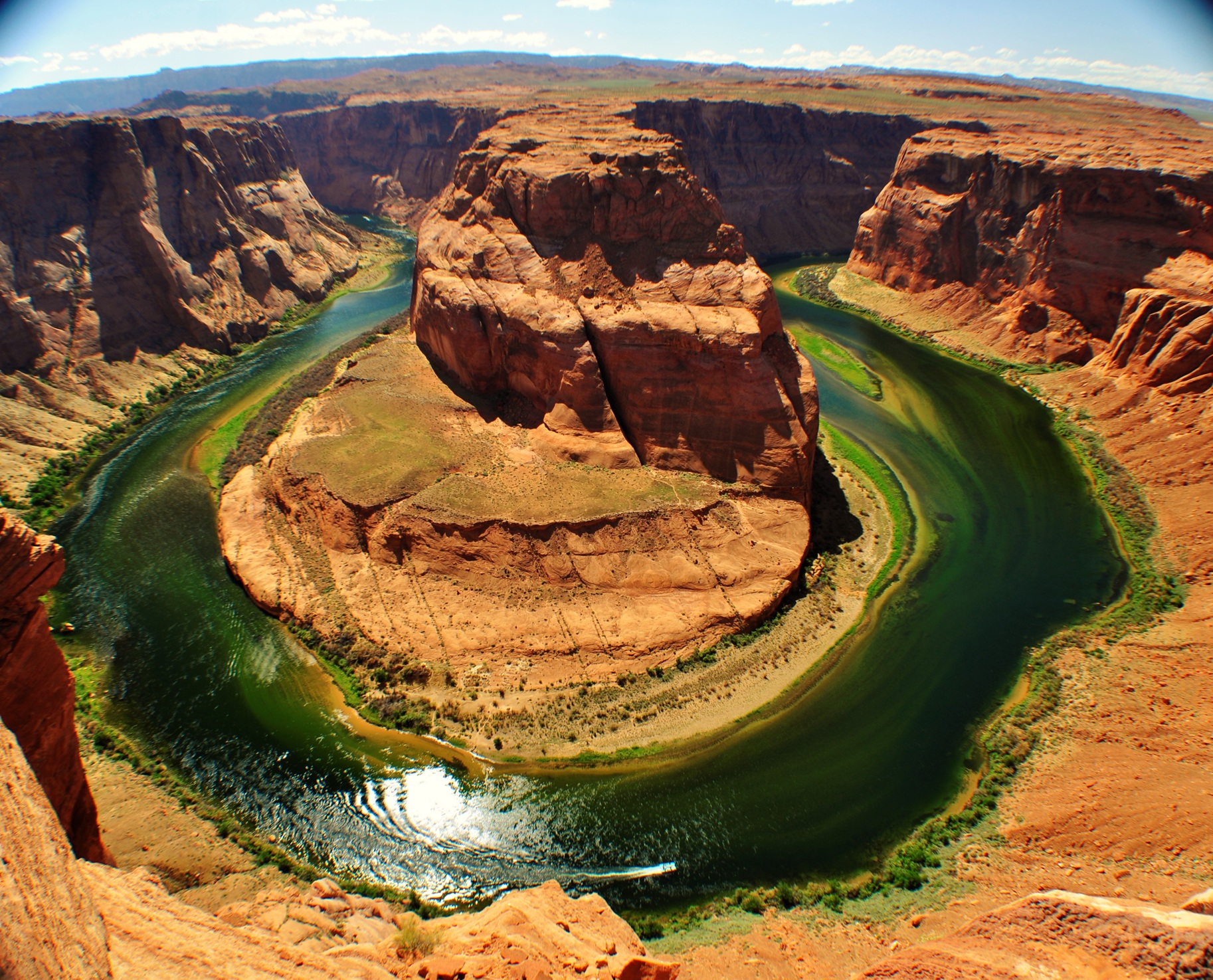
Horseshoe Bend is just outside town - the iconic oxbow of the Colorado River that you've seen in a hundred photographs. Standing at the rim looking down at that perfect horseshoe of blue-green water is one of those experiences where the real thing actually exceeds the photograph. The scale is hard to convey in a picture. In person, it stops you.
Monument Valley
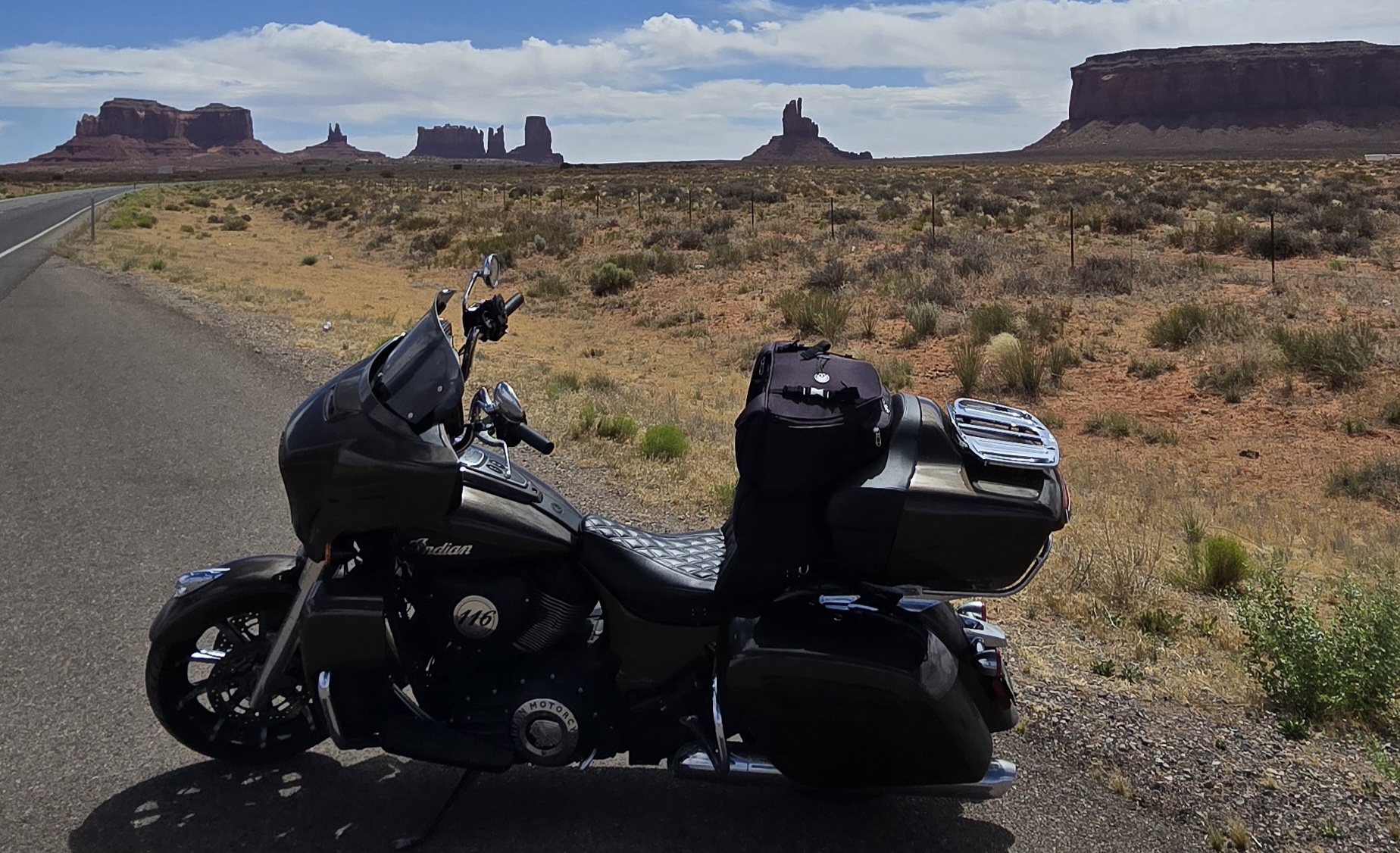
US-163 through Monument Valley is one of the most visually dramatic roads on the continent.
The Mittens rise from the valley floor like something a film director invented - sandstone buttes standing hundreds of feet tall against a sky that goes on forever. John Ford shot half of Western cinema here. You feel the weight of those films as you ride through, even if you can't name a single one. The landscape carries its own mythology.
Somewhere along US-163 is a stretch of straight road that looks almost exactly like the shot from Forrest Gump - the one where he finally stops running. I pulled over. I stood in the road. I understood completely why he stopped there.
Four Corners
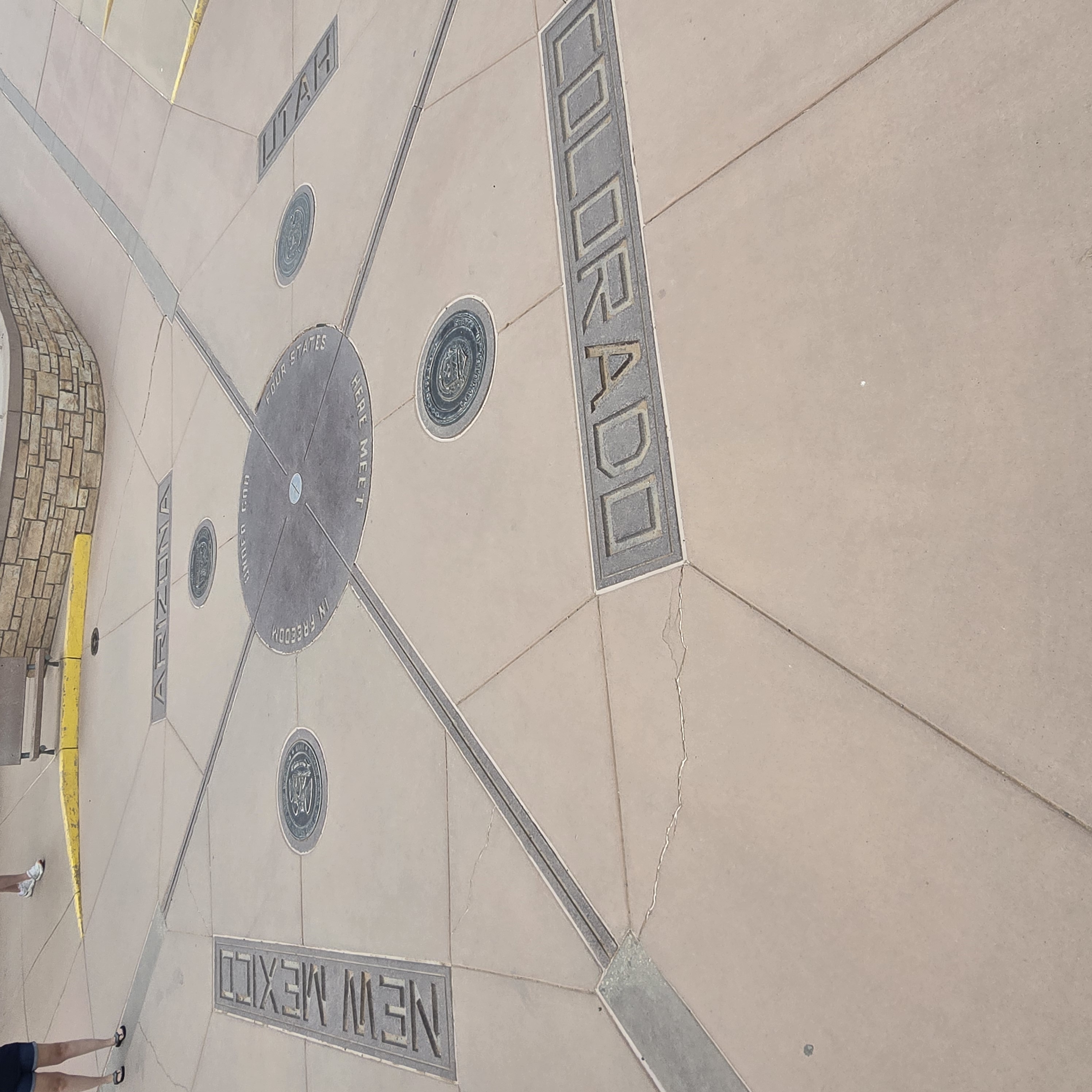
Four Corners is the only point in the United States where four states meet: Utah, Colorado, Arizona, and New Mexico. There's a monument there, managed by the Navajo Nation, and on any given day a rotating crowd of tourists doing the same thing - crouching down to put one hand or one foot in each state simultaneously. There's something irresistible about the geometry of the thing, even if the actual spot is essentially arbitrary - a surveying decision from the 1860s that happened to stick.
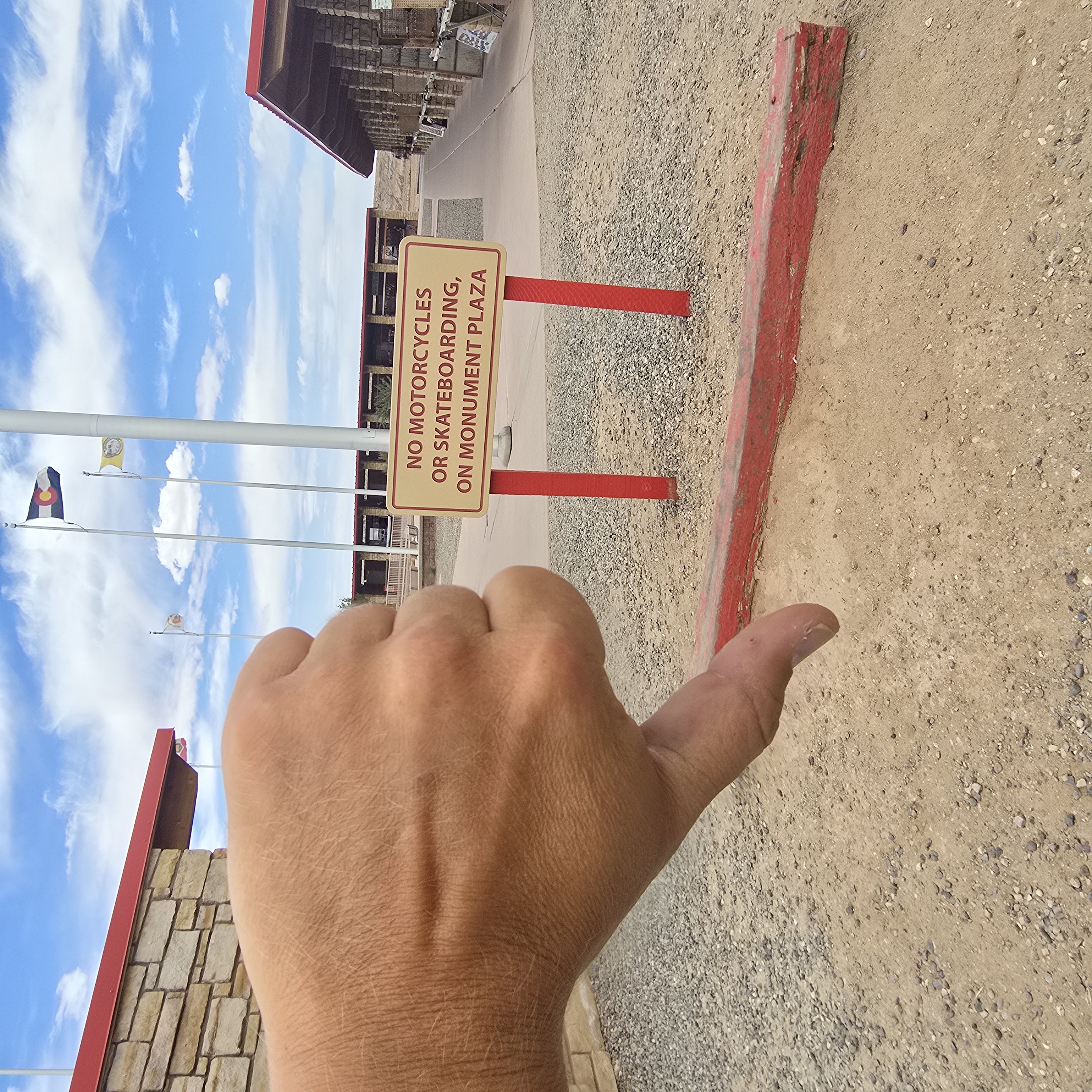
What's not arbitrary is the drive to get there. The roads through the Four Corners region cut through some of the most remote and beautiful land in the country. Red rock, sage, silence, and a sky so blue it almost looks fake.
What the Desert Teaches You
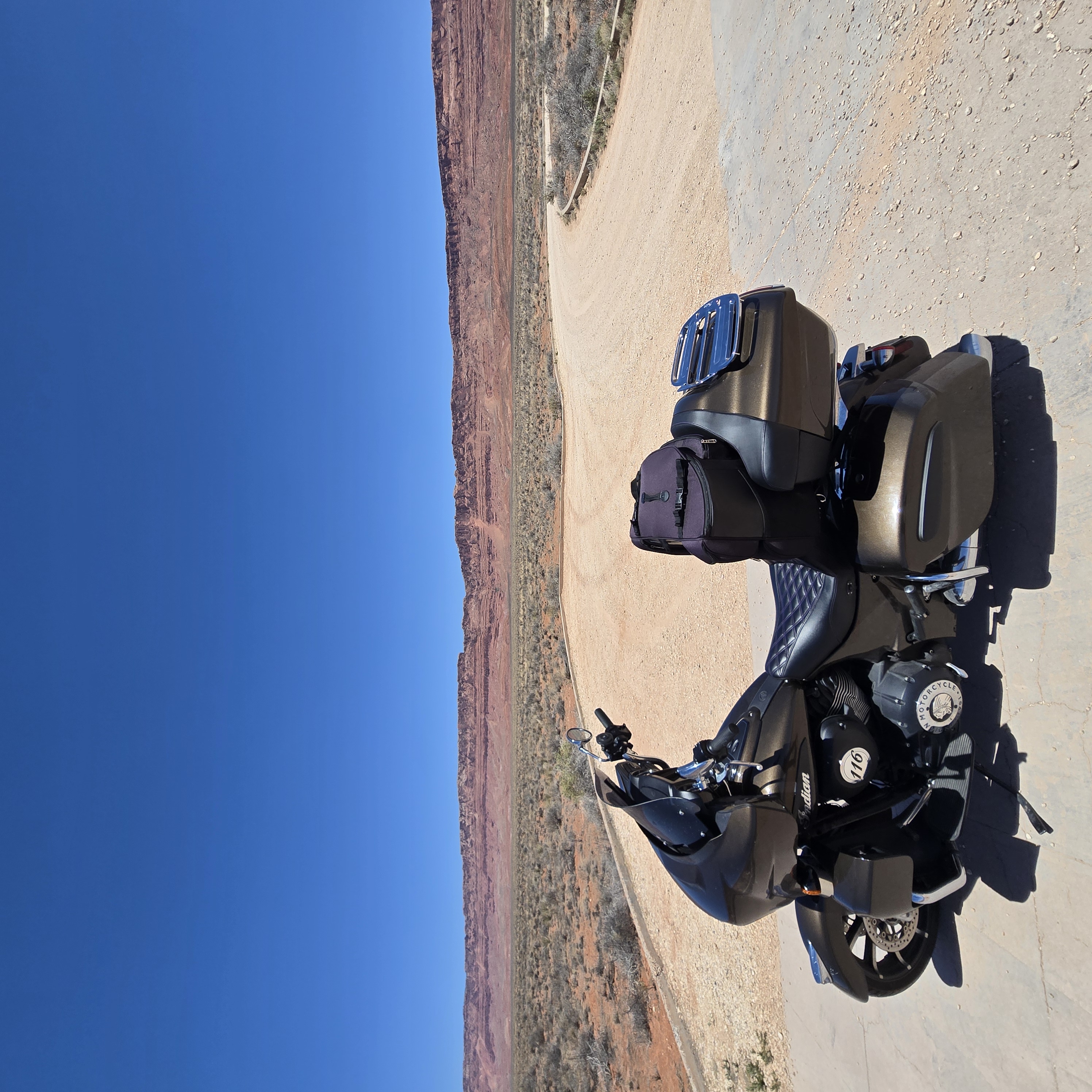
There's a quality of attention that long rides through empty landscapes produce. No traffic to manage, no decisions to make - just the road and the horizon and whatever is moving through your mind.
The high desert of the American Southwest is a particularly good place for this. The scale of it is humbling without being oppressive. You feel small, but in a way that's freeing rather than diminishing. The mesas were here before you arrived and they'll be here after you leave, and somehow that's a comfort.
I came into this part of the ride with no particular agenda beyond the waypoints. I left with something I didn't know I was looking for.
The road has a way of doing that.
This ride was a 26-day motorcycle journey from Delaware, Ohio to Huntington Beach, California and back. This is Part 2 of a 6-part series. Read Part 1 here.